Who We Are
Schools are one of the most powerful tools to mitigate extremist influences. They are key to achieving the tolerant and open-minded societies of the future. But they can also be…


Schools are one of the most powerful tools to mitigate extremist influences. They are key to achieving the tolerant and open-minded societies of the future. But they can also be…

IMPACT-se’s latest review of Jordanian textbooks for the 2025–2026 school year, covering 125 textbooks, including 32 newly introduced textbooks, finds that although key themes include tolerance and religious moderation, problematic material persists and new concerning content has also been introduced. Although the curriculum promotes coexistence, peacemaking and presents women in more diverse roles, both old and new materials continue to glorify violent interpretations of jihad and martyrdom, and contain highly antisemitic stereotypes and tropes, as well as deeply homophobic content.

IMPACT-se’s latest review of Qatari textbooks approved for the 2025–2026 school year finds that, for the fourth consecutive year, previously identified problematic content remains unchanged. The curriculum continues to promote religious superiority and intolerance toward the “Other,” portraying non-Muslims as corrupt or “foul.” Content also persists which endorses violent interpretations of jihad and encourages martyrdom.

This study explores how themes of peace, diversity, gender equality and international conflict are addressed in Tunisia’s state-approved textbooks. It finds that the curriculum consistently encourages peaceful coexistence, intercultural dialogue, and cooperation with the wider world, while rejecting extremism and underscoring respect for diversity and women’s equality. These features distinguish Tunisia as a relatively progressive case within the region.
However, the report highlights clear inconsistencies in the portrayal of Jewish identity and the Arab–Israeli conflict. Jews are often depicted through antisemitic stereotypes, Zionism is frequently presented solely as a colonial enterprise, and the conflict itself is framed in a highly politicized and one-sided manner.

European Textbooks: Hungary Review
Our study discusses the presentation of Jews, Judaism and related topics in Hungarian state-approved textbooks. It reveals that Hungary’s curriculum includes extensive content on Jewish history, including the historic role of Israel and the Jewish contribution to Hungary. The Holocaust is covered in depth and personalized through individual stories, while the Hebrew word “Shoah” is even used to reference the Holocaust. Antisemitism is placed in appropriate context and explored through vivid examples including local blood libels. Meanwhile, the Israeli-Palestinian conflict is presented accurately and objectively across textbooks – Some even highlight the expulsion of Jews from Arab states, which is rarely addressed in European curricula.
Click here to view the report.

Our report on Greek textbooks shows an accurate and respectful approach to Judaism, Jewish tradition and the Holocaust. The study finds that the curriculum reflects Greece’s commitment to international standards for peace and tolerance education.
Judaism is presented with balance and care within Religious Education textbooks, including lessons on the Torah, Jewish festivals, and beliefs. The Holocaust is taught with exceptional depth, most notably in a Grade 12 History textbook that devotes a full chapter to the genocide, includes survivor testimonies, and highlights the courage of Greek citizens and clergy who protected Jewish communities during the war.
The report notes positive curriculum updates, including the removal of antisemitic and unbalanced material from a Junior High School textbook, reflecting a commitment toward fairness and accuracy. However, the study also identifies areas for further development. Antisemitism itself is not directly addressed, and prewar Greek Jewish life, Zionism, and the establishment of Israel receive little attention. Expanding on these themes would further strengthen the Greek curriculum.

Our comprehensive review of the Palestinian Authority’s 2025–26 national school curriculum, analyzes 290 textbooks and 71 teacher guides used in West Bank, Gaza, and East Jerusalem schools (including UNRWA). The study finds the materials substantively unchanged from prior editions and documents recurring patterns across subjects: promotion of jihad and martyrdom, glorification of terrorism, incitement of antisemitism, rejection of peacemaking and the two-state solution, and erasure of Israel from maps.The report notes these themes across subjects, including science and math textbooks, in which violence is normalized. Meanwhile, language exercises and teacher guides include narratives that idealize armed struggle and present historical figures who perpetrated deadly attacks on civilians as role models. Overall, the findings provide an evidence-based portrait of the current curriculum’s content, themes, and classroom guidance.

The findings reveal that while isolated passages promote civic virtues, the broader picture is troubling. Violent jihad and martyrdom are valorized—even in language lessons, gender content is paternalistic, while antisemitic stereotypes recur. These patterns raise concerns about how Iraq’s education system addresses tolerance, diversity, and gender equality—and about continued non-compliance with international standards

Our Pakistan report presents an in-depth analysis of 86 government-approved textbooks used across Punjab, Sindh, and federal school boards, covering a range of subjects and grade levels. This comprehensive review examines how these materials address themes such as diversity, coexistence, gender equality and democracy.
While some lessons do encourage tolerance and mutual respect, particularly in isolated sections, the review found that many textbooks still fall significantly short of UNESCO-based standards for promoting peace, respect, and anti-incitement. They frequently sideline non-Muslims and foster hostility towards specific groups such as Jews and Pakistan’s neighbor India. Routinely, religious content is integrated into non-religious subjects, with jihad often framed as armed struggle or defense.

IMPACT-se’s updated report on Indonesia’s textbooks provides an important barometer in assessing the direction of the world’s fourth most populous country. The study analyzes Indonesia’s most recent Merdeka Curriculum and compares it with the previous 2013 Curriculum. The findings reveal a significant shift toward inclusivity and tolerance. The new curriculum highlights minority religions and indigenous belief systems as essential to Indonesia’s national identity. It also presents a more balanced portrayal of Jews and Judaism, eliminating problematic content from earlier editions, and promotes greater interfaith understanding. With a population of 240 million and growing geopolitical relevance, Indonesia’s education system plays a key role in shaping both the country and beyond.
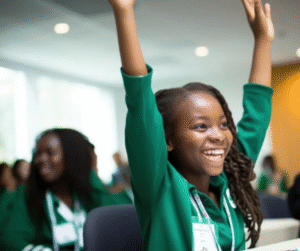
This report examines over forty Nigerian textbooks for Grades 1‑12 in subjects including Civic Studies, Social Studies, History, Islamic and Christian Religious Studies, published between 2014 and 2024. Evaluated against UNESCO-based benchmarks, these texts frame peace and democracy as civic virtues, emphasize tolerance, and acknowledge historical interfaith harmony. Yet, contradictions arise, with endorsements of harsh penalties, corporal punishment, and omission of significant human rights issues. Nigeria’s pluralism is showcased through references to ethnic diversity, languages, and traditions, though smaller groups like the Isoko and Tiv remain underrepresented. Textbooks criticize British colonialism for cultural imposition while also advocating international cooperation, presenting a nuanced historical perspective. Gender representation emphasizes women’s roles but frequently frames equality within male authority, marginalizes girls, and condemns LGBTQ+ identities.

IMPACT‑se’s France Textbook Review—part of our eight‑country Europe research program—examines how Jews, Judaism, Israel and antisemitism are portrayed across the national history curriculum (Grades 4–9) and leading high school textbooks (Grades 10–12), measuring alignment with UNESCO standards for peace and tolerance.
While the report finds solid content on Jewish-related themes including antisemitism, the Holocaust and Israel, it also highlights gaps that obscure the fuller story of Jewish life. In particular, there is room for expansion on Jewish contributions to French society, Napoleon’s Jewish emancipation and Vichy collaboration during the Holocaust. Due to France’s strict separation of state and religion, Jewish content is included only in historical and civic contexts.
France hosts Europe’s largest Jewish community (about 446,000 people), but antisemitic incidents have surged—from 436 in 2022 to 1,676 in 2023—and high‑profile attacks such as the 2012 Toulouse school shooting and the 2015 Hypercacher supermarket massacre underscore the importance of accurate education.

IMPACT-se’s latest review of Jordan’s 2024–2025 national curriculum finds a troubling regression in content related to peace, tolerance, and coexistence. While Jordan’s textbooks cite the Amman Message and emphasize religious harmony between Christians and Muslims, the curriculum continues to reinforce extreme antisemitic tropes, justify violence against Israel, and portray the peace treaty with Israel in a negative light. Notably, a newly introduced textbook downplays and legitimizes Hamas’s October 7 attack, falsely presenting it as a response to Israeli actions while omitting the murder of over 1,100 Israeli civilians. Israel’s existence continues to be erased from maps, while Zionism is framed as a racist colonial conspiracy. The Holocaust is entirely absent from history lessons.
Additionally, the curriculum contains new content promoting intolerance towards women and LGBTQ+ individuals, labeling homosexuality as a threat to humanity and reinforcing rigid, discriminatory gender roles. Despite Jordan’s long-standing diplomatic relations with Israel, its educational materials fail to align with UNESCO standards of peace and tolerance, instead promoting division, hostility, and extremist narratives.


Israel and Jews in Kazakhstan’s Education
IMPACT-se’s latest report offers a nuanced look at over 100 Kazakhstani school textbooks used from Grades 2 to 11, examining how they portray Jews, Judaism, Israel, and the Arab-Israeli conflict.
The findings reflect Kazakhstan’s commitment to promoting religious and cultural tolerance. Judaism is introduced respectfully as part of the country’s multicultural makeup, with textbooks highlighting Jewish beliefs, rituals, scripture, and contributions to global civilization.
Students are encouraged to value interfaith harmony, and there are clear efforts to distinguish religious conservatism from extremism. Textbooks also acknowledge antisemitism and the Nazi genocide of Jews, though key terminology such as “Holocaust,” “concentration camps,” and “ghetto” is absent—signaling a need to deepen Holocaust education.
Portrayals of Israel vary: while upper-grade books offer thoughtful, even admiring accounts (including Israel’s revival of Hebrew), others contain inaccuracies and one-sided framing of the Arab-Israeli conflict. The report recognizes a strong foundation for promoting peace and inclusion in Kazakhstan’s education system, while encouraging further alignment with international standards of tolerance and historical accuracy.
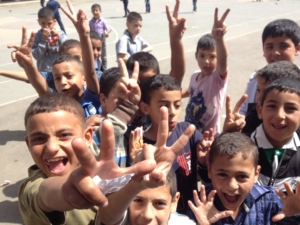
The Palestinian Authority’s (PA) newly introduced “abridged curriculum” for Gaza condenses the same radical, antisemitic, and violence-promoting content that has long characterized its textbooks. This report by IMPACT-se examines the new educational material, revealing that far from fostering an environment of peace and coexistence, the PA’s abridged textbooks continue to glorify terrorism, incite hatred, and erase Israel from maps.
The abridged curriculum was introduced as part of a remote-learning initiative following the war in Gaza, allowing students to complete two academic years in one. However, despite this restructuring, the educational materials remain largely unchanged in substance, perpetuating incitement and failing to meet the standards of peace, tolerance, and mutual respect set by UNESCO.
IMPACT-se’s latest report provides a detailed analysis of the content in Gaza’s newly condensed textbooks, along with an assessment of the educational environment in reopened schools. The findings highlight that radicalization is still deeply embedded in Palestinian education, contradicting repeated assurances by the PA that it is working toward reform.


A Review of Hay’at Tahrir al-Sham’s Intended Changes to the Syrian Curriculum
IMPACT-se’s latest report uncovers informative changes in Syria’s education system following the takeover by Hay’at Tahrir al-Sham (HTS). The new regime has initiated textbook reforms, replacing nationalistic and Assad-era content with an increasingly Islamized framework. While the removal of Assad’s influence signals a political shift, the reforms increasingly embed religious doctrine into the curriculum, potentially altering Syria’s educational trajectory. The changes reframe history through an Islamist lens, modify references to the Ottoman Empire, and eliminate nationalistic studies entirely.
At the same time, antisemitic material remains unchanged, continuing to vilify Jews and Israel. Despite some efforts to neutralize terminology surrounding the 1973 war, the curriculum still promotes narratives that foster division and intolerance. Additionally, the removal of female figures from textbooks signals a regression in gender representation. These concerning shifts raise timely questions about the future of Syria’s education system and its adherence to international standards of peace and tolerance.

IMPACT-se’s latest research, conducted in collaboration with INSS, examines the potential of a Pan-Abrahamic approach to transforming education in the Middle East and North Africa. The report highlights how regional curricula have long struggled with radical narratives, exclusionary national identities, and the marginalization of minorities, including Jews and Israel. By fostering a shared educational framework rooted in the Abrahamic tradition, there is an opportunity to replace hostility with mutual recognition and regional unity. The study examines historical influences shaping MENA curricula, including nationalistic ideologies and Islamist perspectives, and contrasts them with emerging efforts at peace education. While the Abraham Accords have laid the groundwork for reconciliation, education remains a critical missing piece in solidifying a future of coexistence. The report identifies both challenges and opportunities in aligning regional education with international standards of peace and tolerance. Report

This IMPACT-se report examines the significant strides in reforming Egypt’s school textbooks for the 2023–24 academic year, with 80% of students now studying revised materials that better promote standards of peace and tolerance. Notable improvements include greater recognition of historic Jewish presence in Egypt and an emphasis on respect for diversity, religious coexistence, and a moderate vision of Islam in younger grades.The curriculum highlights positive narratives about Jews and Judaism, portrays Israel as a legitimate peace partner in the context of the Egypt-Israel peace accords, and promotes values of tolerance, sustainable development, and inclusion. However, unrevised textbooks in higher grades still contain problematic content, including antisemitic stereotypes and hostility towards Israel, signaling the need for continued reform.These ongoing reforms demonstrate Egypt’s commitment to fostering a more inclusive educational environment while addressing remaining challenges to ensure a curriculum that fully aligns with international standards. Report


Updated Review of Saudi Textbooks 2023-24
This IMPACT-se report on the 2023-24 Saudi Arabian textbooks examines curricular changes over the past five years. A comprehensive review of 371 textbooks published between 2019 and 2024 reveals shifts towards peace and tolerance per UNESCO standards. Negative portrayals of infidels and polytheists, and depictions of Shi’a and Sufi practices as heretical have decreased. Problematic examples promoting jihad and martyrdom have been removed or altered, and there are notable improvements in gender representation and reduction of homophobic content, although traditional gender roles and the prohibition of cross-dressing remain. The curriculum shows a strong dedication to the Palestinian cause, though with revised portrayals of Israel and Zionism, eliminating content that previously defined Zionism as a “racist” movement. Despite these changes, Israel is still not recognized on maps, references to “Palestine” have been reduced, the Holocaust is absent, and Israel is referred to as “Israeli occupation” or “Israeli occupiers” regarding the 1948 War.

European Textbooks: Ireland Review
This IMPACT-se report examines Irish school textbooks and reveals concerning misrepresentations of the Holocaust, Judaism, and Israel. Among the findings, the Holocaust is minimized, with Auschwitz incorrectly referred to as a “prisoner of war camp,” diluting its historical reality. Textbooks are often hostile towards Israel and include questions that imply Jewish values are not aligned with peace. Additionally, Judaism is portrayed as condoning violence to promote justice, contrasting with peaceful depictions of other religions. These findings underscore the need for curriculum reform to foster accurate, balanced, and respectful education. This report is the first in a new Europe-wide program assessing textbook portrayals across eight selected countries.

The Portrayal of Jews and Israel in Muslim and Arab Textbooks: Major Trends
This special publication, produced in collaboration with INSS by IMPACT-se Head of Research Eldad Pardo and Research Associate Dr. Yonatan Negev, explores the portrayal of Jews and Israel in textbooks from Muslim and Arab countries across the Middle East, North Africa, Azerbaijan, and Indonesia. The depiction of Jews varies from negative stereotypes influenced by traditional and modern antisemitism, to occasional positive references acknowledging the respect given to the “Israelites” by the Prophet Muhammad. Israel is mostly portrayed negatively, especially in relation to the Palestinian conflict. Meanwhile, there is little mention of the Holocaust or the history of indigenous Jews in the region. While textbooks might be free from anti-Jewish content but still contain anti-Israel material, the reverse is not seen. The study also finds that countries which deviate from promoting a moderate and inclusive educational vision tend to include more delegitimizing rhetoric against Jews and Israel. Conversely, those striving for curricula that emphasize peace and tolerance often reduce radical discourse against Jews and Israel.

CLASHING NARRATIVES AND IDENTITIES IN IRAQ’S SCHOOL CURRICULUM
This IMPACT-se report offers a comprehensive insight into 71 textbooks from the Republic of Iraq’s national school curriculum, dated 2015-2022, for grades 1-12. Our findings showed that textbooks continue the largely conservative ideas which originate from Saddam Hussein’s rule (1979-2003) and earlier, only partially reflecting modern-day developments in Iraq since the 2003 war. The study addresses the complex depictions of violent jihad and martyrdom, terrorism, and gender roles. The curriculum presents a muted approach to regional and global issues, with notable exceptions including negative descriptions of the United States in a historical context. The portrayal of Jews, Judaism and Israel occupies a central focus, and reflects a deep animosity towards these topics.

Arabs and Palestinians in Israeli Textbooks 2022‒23
This IMPACT-se report offers an insight into major themes relating to Arabs and Palestinians in government-approved, Hebrew-language Israeli school textbooks covering civics, geography, Hebrew studies, history, homeland, society and civics, Israel studies, Jewish thought, and Jewish-Israeli culture. The research explores how specific lessons, images and exercises portray and shape attitudes toward Palestinians and Arabs from various backgrounds within Israeli society and the greater region. It evaluates the presentation of the Arab-Israeli and Israeli-Palestinian conflicts, the peace process, and Arab and Palestinian Other—living either as citizens of Israel, in Jerusalem, the West Bank, the Gaza Strip, and elsewhere. This analysis looks at 107 textbooks taught at state and state-religious schools approved by the Israeli Ministry of Education for the 2022–23 academic year.
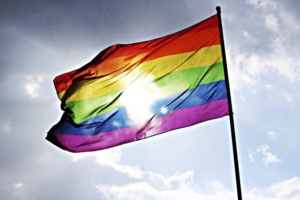
A Look at Gender Representation and LGBT-Inclusive Education in Israeli Textbooks
This brief on LGBT education in Israel examines two of the nine areas IMPACT-se reviews during textbook analysis – ‘Gender Identity and Representation,’ and ‘Sexual Orientation.’ The teaching of LGBT materials is afforded lesser importance in the curriculum: such content is generally not included in textbooks, and is instead provided as online supplementary materials. Nonetheless, education on LGBT identity is provided in the Ministry of Education-approved, mandatory “Life Skills” Program, which advocates for acceptance, tolerance, empathy, and responsibility toward the Other. This is available on the Ministry of Education website, is mandatory, and has been prepared in collaboration with an LGBTQ non-profit organization.

Israel and Jews in Egyptian Textbooks – A Forward-Looking Perspective
This report is co-authored by Dr Eldad Pardo, IMPACT-se Director of Research and Dr. Ofir Winter, Senior Researcher at the Institute for National Security Studies. The report provides a comprehensive study on school curricula in Egypt in light of recent regional developments, including the Hamas attack on Israel on 7 October. In the knowledge that textbooks can serve as a useful and instructive tool for researchers seeking to understand the vision of a country’s leadership in the medium and long term, this report uses the lens of Egyptian education as an indicator of future trends, in particular towards Israel-Egypt relations.

Between Conservatism and Reforms: The Dual Nature of Al-Azhar’s School Curriculum
This report offers a first-of-its kind insight into the curriculum taught at the influential Al-Azhar religious seminary in Egypt. The institute operates a separate K-12 school system that publishes its own textbooks and teaches them alongside those of the Egyptian national curriculum, which IMPACT-se researched in April. The study evaluated 63 textbooks across grades 7–12, spanning many genres of classical Islamic literature: Qur’an commentary, hadith, jurisprudence, Islamic history and culture, grammar, and rhetoric. Our findings reveal a strong emphasis on combating radical Islam, while still promoting adherence to traditional Islamic beliefs and texts.

UNRWA Education: Textbooks and Terror—November 2023
With this damning report, documenting support for the October 7 Massacre among UNRWA teachers and other staff members, IMPACT-se uncovers evidence of the connection between the content of textbooks taught in UNRWA schools and the atrocities committed on October 7, reflecting years of hate-teaching in these schools. It further reveals that at least 100 Hamas members committing the terror attacks are graduates of UNRWA’s education system, whose textbooks include content that encourages antisemitism, glorifies violence and promotes militant jihad. English French

Updated Review of Saudi Textbooks 2022–23
IMPACT-se’s latest review of the Saudi national curriculum evaluates the 2022–23 school year, and any changes made compared to previous editions. The report covers the entire humanities corpus over the last five years, totaling 301 textbooks, and including 80 textbooks for the current 2022–23 school year. Our findings reveal an overall trend of improvement and reform, building on the gradual removal of problematic content in Saudi textbooks since IMPACT-se’s 2020 report. A significant number of examples teaching harmful material on Jews and Christians, violent jihad, gender, and homosexuality have been removed, and negative portrayals of infidels have been moderated.

IMPACT-se’s most comprehensive report to date on the Egyptian national school curriculum, evaluated 271 textbooks published between 2018 and 2023. The study focuses on Arabic language, Islamic and Christian religious education, social studies, Values and Respect for the Other, history, geography, philosophy, and more. The research comes amid an ongoing year-by-year reform of the Egyptian national curriculum between 2018 and 2030 across all grades (as yet up to grade 5), and found that the reformed curriculum shows highly positive change thus far.

UNRWA Education: Reform or Regression
A joint IMPACT-se/United Nations Watch report concerning incitement to hate and violence by UNRWA teachers and schools, is being presented on Tuesday, March 14 to Congress. The report uncovers 47 new cases of incitement by UNRWA staff, in breach of the agency’s stated policies of zero tolerance for racism, discrimination, or antisemitism in its schools and educational materials. Teachers and schools at the UN agency that runs education and social services for Palestinians regularly call for the murder of Jews, and create teaching materials that glorify terrorism, encourage martyrdom, demonize Israelis, and incite antisemitism.

The Moroccan Curriculum: Education in the Service of Tolerance
This IMPACT-se report offers a first-of-its-kind insight into 127 textbooks from the Kingdom of Morocco’s national school curriculum, published between 2013 and 2022. Our research found that the Moroccan curriculum largely adheres to UNESCO standards of peace and tolerance: textbooks promote the centrality of peace and tolerance to Moroccan identity, society and foreign policy, alongside democracy, human and civil rights. The curriculum places an emphasis on women’s issues, as well as the history and traditions of the indigenous Amazigh population. Morocco’s Jewish community is frequently and warmly represented. Textbooks discuss European colonialism and contemporary foreign policy, as well as Morocco’s territorial integrity.

Unity in Diversity: The Indonesian Curriculum
This IMPACT-se report offers a first-of-its-kind insight into the Indonesian curriculum for grades 1–12. The research explores how specific lessons, images and exercises portray and shape attitudes toward international relations, officially recognized and non-recognized religions, gender equality, local languages and cultures, and ethnic minorities. It evaluates the ways in which the state philosophy of Pancasila promotes national values of unity within diversity; religious and social harmony; humility; the importance of local wisdom; and respect toward other nations. This analysis looks at 169 textbooks taught in the Standard Public Track, schools run by the Indonesian Ministry of Education, which make up 85 percent of all students.

Iran’s Radical Education: An Interim Update Report, 2021–22
IMPACT-se’s updated Iran report analyzed new sets of textbooks in the Iranian curriculum created for the current 2021–22 academic year. The findings indicate a greater degree of radicalization than in previous IMPACT-se reports. Findings show that the Islamic Republic’s curriculum provides educational content that continues to teach students about the prospect of a global struggle to spread the Islamist-Khomeinist revolution from as early as the first grade. The world is divided between followers of Iran’s global revolution and those who oppose it. Students are taught that Arab proxy militias are part of the Iranian regime and core to its goals. A central tenet of the curriculum is aimed at equipping the military forces of the country. Students are taught that they are constantly under threat, most notably from the United States. As is the case with prior reports, antisemitism remains rife, classic antisemitic tropes are used to describe Zionism as a wealthy ring of evil Jewish capitalists looking to control the world for malicious gain.

Review of Changes and Remaining Problematic Content in 2021–2022 Qatari Textbooks
IMPACT-se’s latest review of the Qatari curriculum evaluates changes made in fall and spring semester textbooks for 2021–22. Over the last two years, Qatar’s textbooks have slowly improved with adjustments made toward moderation, including lessons on tolerance and racial discrimination. Significant progress was observed in removing antisemitic and anti-Christian content as well as examples of violent jihad. While the curriculum still disproportionately focuses on Israel, the hostile tone is lessened. Other problematic content remains, including antisemitic material, violent interpretations of jihad, hateful material against infidels and polytheists, demonization of Israel, and rejection of Arab-Israeli normalization.

Review of Changes and Remaining Problematic Content in Saudi Textbooks 2021–22
IMPACT-se has released its 2022 annual update on Saudi textbooks, depicting an overall trend of improvement following major reforms since 2020. Whereas only a decade ago, focus was put on encouraging students to prepare for jihad and martyrdom, the majority of references to violent jihad justifying and praising violence and murder on behalf of the Prophet Muhammad have now been removed from the textbooks. And while some problematic content such as negative depictions of Jews, Zionism and Christians remain or have even been made worse, others, particularly instances of the kind of antisemitism based on modern European tropes, have largely been removed.


The Emirati Curriculum 2016–21, Grades 1–12—Selected Examples
This IMPACT-se report provides a list of 134 selected examples from 220 textbooks in the United Arab Emirates’ national curriculum, between 2016–21. The examples illustrate the findings of our latest research report, “When Peace Goes to School: The Emirati Curriculum 2016-2021,” presenting lessons on peace, tolerance, and cooperation with the world and non-nationals, which are taught to be closely associated with prosperity and national identity. The language and moral education programs especially encourage cultural diversity, curiosity, and happiness. Additionally, the Abraham Accords are taught, and anti-Israeli material has been moderated. The research did not find antisemitism or incitement to violence, and UNESCO guidelines for peace and tolerance are generally met.

WHEN PEACE GOES TO SCHOOL: The Emirati Curriculum 2016–21
This IMPACT-se report evaluates the UAE’s national curriculum for the 2021–22 academic school year. Among the findings: The curriculum teaches that prosperity and national pride are closely associated with peace and tolerance. There is a realistic approach to peace and security with a priority on peacemaking. Language and moral education programs encourage cultural diversity, curiosity and happiness. Students prepare for a highly competitive world and are taught positive thinking and well-being. The Abraham Accords are taught and anti-Israeli material has been moderated. UNESCO guidelines for peace and tolerance are generally met.

Review of Changes and Remaining Problematic Content in Qatari Textbooks 2021-22 Fall Editions Grades 1–12
This new IMPACT-se report evaluates changes made in the Qatari fall semester textbooks for 2021–22. The report found that the Qatar curriculum continues a trend of slow improvement since our reports in August 2020 and June 2021, by removing additional disturbing and unacceptable passages previously criticized in IMPACT-se’s reports. However, passages that demonize Jews, praise martyrdom, and blame holy faiths for corrupting holy texts remain. Although some changes are suggestive of positive movement, a great deal of improvement is necessary to align the curriculum with international standards of Peace and Tolerance.

A FURTHER STEP FORWARD: Review of Changes and Remaining Problematic Content in Saudi Textbooks 2021–22
This latest IMPACT-se report on the Saudi Curriculum shows further dramatic improvements to Saudi Arabia’s school textbooks, continuing the significant changes seen in mid-2020 and documented in IMPACT-se’s last Saudi textbook report. Over the last year, textbooks have been moderated in several key areas. The greatest changes have been made to lessons dealing with Jews, Christians, non-believers, and violent jihad; twenty-eight lessons featuring demonization of the Other and religious intolerance were removed or heavily modified. While problematic material remains in Saudi textbooks, these represent profound changes in these categories.

UNDERSTANDING QATARI AMBITION: The Curriculum 2016–20 (Updated)
This updated IMPACT-se report continues to focus on Qatar’s school curriculum for grades 1–12. The study builds upon previous IMPACT-se research within the prism of UNESCO standards and other UN and international declarations, recommendations and documents relating to education for peace and tolerance. Our review determined that the Qatari curriculum does not yet meet those international standards. Textbooks teach Qatari children to accept others different than themselves and advocate for peace while at the same time echoing antisemitic canards and reinforcing the Qatari regime’s support for Islamist terror organizations. Despite a slight movement away from radical jihadism, much remains. Nevertheless, Qatar’s curriculum remains heavily influenced by Western educators—displaying the Qatari gift for embracing contradictions.

The 2020–21 PALESTINIAN SCHOOL CURRICULUM GRADES 1–12—SELECTED EXAMPLES
This updated May 2021 IMPACT-se study analyzed textbooks used for the 2020-21 Palestinian curriculum (West Bank, Gaza, East Jerusalem and UNRWA) and includes selected examples from the research of 222 textbooks. Of those, 105 textbooks have not changed at all and remain as they were in 2019. Essentially, there were that no substantive positive changes made to the current Palestinian curriculum. Textbooks remain openly antisemitic and continue to encourage violence, jihad and martyrdom while peace is still not taught as preferable or even possible.

REVIEW OF HOUTHI EDUCATIONAL MATERIALS IN YEMEN_2015–19
The Ansar Allah Houthis, have penetrated the mainstream Yemeni education system as part of a campaign to spread their influence over the region. This exclusive IMPACT-se report reviews materials produced by the Houthis for use in its network of summer camps and extra-curricular classes as well as take-home materials including a monthly children’s “educational” magazine called Jihad. As an Iranian proxy, the Houthi materials mimic much of the Khomeinist rhetoric of that regime and represent some of the more egregious violations of UNESCO standards of peace and tolerance among current Middle Eastern education.

THE ERDOGAN REVOLUTION IN THE TURKISH CURRICULUM TEXTBOOKS
Turkish President Recep Tayyip Erdogan has made significant changes to Turkey’s state-approved school textbooks since taking power in 2003. This report is the fourth undertaken by IMPACT-se into the Turkish curriculum. We have identified a marked deterioration in Turkish textbooks since our last review in 2016, in regards to meeting UNESCO defined standards of peace and tolerance. On the contrary, textbooks have been weaponized in Erdogan’s attempts to Islamize Turkish society and to hark back to a nostalgic age of Turkish domination.

REVIEW OF UNRWA-PRODUCED STUDY MATERIALS IN THE PALESTINIAN TERRITORIES
PA school textbooks have consistently shown a systematic insertion of violence, martyrdom and jihad across all grades and subjects. Yet, it is this material that is taught in UNRWA-run schools throughout the Palestinian Territories of the Gaza Strip and West Bank as well as Jerusalem. Our research shows that UNRWA, as a UN organization, knowingly produces and teaches material in its Gaza Strip and West Bank schools that are rife with problematic content that contradicts stated UN values. UNRWA’s lack of transparency to address such problematic issues make it impossible to evaluate the effectiveness of any efforts it claims to have made. Updated Research of post-November material shows hate remains.

REVIEW OF SAUDI TEXTBOOKS 2020–21
This follow-up report of Saudi 2020-21 textbooks by IMPACT-se shows that while many problematic examples have been removed from the curriculum, some still remain. The removal of the problematic content however, should certainly be seen as a significant improvement and an encouraging development, representing a step toward moderation. Our sense is that the Saudi kingdom, along with some other countries in the region, is gradually moving in a direction that could bring it in line with UNESCO-derived standards of peace and tolerance—contingent on whether the remaining issues are addressed.

UNITED ARAB EMIRATES—Moral Education Textbooks
This preliminary IMPACT-se report focuses on the United Arab Emirates’ “Moral Education” curriculum, taught in all Emirates public and private schools, from grades 1-12. The research covered the textbooks and teacher guides that make up the “Character and Morality” section of the UAE curriculum, measured against IMPACT-se’s UNESCO-derived standards of peace and tolerance. While the current research covers only this limited spectrum of the UAE curriculum, it is noteworthy that the content goes a long way to incorporate the values of peace and tolerance into a traditional education system. This stand-alone course is unique in the region and may reflect UAE’s emerging leadership in the reform of textbooks.

UNDERSTANDING QATARI AMBITION—The Curriculum 2016–20
IMPACT-se’s interim review of 238 textbooks of the Qatari curriculum for the calendar years 2016-20, used international standards for peace and tolerance. The curriculum appears to be in in a change-mode, moving in a direction from jihadi radicalism toward open engagement with the world. While somewhat less radical than previous versions, the process of moderation is in its infancy. Some particularly offensive material has been removed after decades of radical propaganda in Qatari schools, but while heavily influenced by Western educators, serious issues remain regarding peace and tolerance. Interim Report Exec Sum Centrality of Antisemitism in the Qatari Curriculum Problematic Content in the Qatari Curriculum_Selected Examples

THE WINDING ROAD TO A NEW IDENTITY Saudi Arabian Curriculum 2016-19
The Saudi curriculum, at this stage, should be viewed as a reflection of the efforts being made to transform an exclusively traditionalist Islamic society into one that incorporates more Western economic values and its pre-Islamic heritage. However while the curriculum tries to evolve with such inherent contradictory elements, the radical orthodoxy of the Wahhabis remains dominant. The narrowing of the gap between the kingdom’s modernization goals and their practical application—both within the curriculum and throughout Saudi society—is in the beginning stages of a work in progress.

PALESTINIAN CURRICULUM PUT TO THE TEST The General Certificate of High School Examination in Palestine (Tawjihi)
This report studies the twenty-six tests comprising the Palestinian 2019 Tajihi Matriculation Exam which tests grade 12 material from the Palestinian curriculum. The exam was analyzed according to IMPACT-se’s UNESCO-derived standards for peace and tolerance in school education. IMPACT-se’s finding is that many of the final exams are so designed that students must study problematic content that does not meet international standards for peace and tolerance.

PEACE AND CONFLICT IN ISRAEL STATE-APPROVED TEXTBOOKS: 2000–2018
The article describes the peace and conflict educational approaches found in the Jewish-Israeli curricula between the years 2000–17, and extracts the dominant themes and messages towards Muslim, Arab and Palestinian “others.” Study findings indicate that current Israeli textbooks do not contain any overt racism or incitement against Palestinians. However, ethnocentric perceptions and victim mentality are two themes that still dominate curricular discourse and are counterproductive to peace education goals.

THE REJECTION OF PEACE: References to Peace Agreements, Israel, and Jews, Now Removed from PA Curriculum
A report on selected positive content about peace, relations with Israel, and Jewish historical presence previously in the Palestinian curriculum between 2000 and 2016, now removed from the 2016–19 curriculum. Although some of the positive examples were removed even before 2016, the “new” PA curriculum represents a quantum leap backward toward radicalizing the textbooks—and unfortunately— Palestinian children.

THE NEW PALESTINIAN CURRICULUM: BY THE NUMBERS Quantitative Analysis of the Current Palestinian Ministry of Education Curriculum
A quantitative analysis of textbooks from the current Palestinian Ministry of Education curriculum, applying UNESCO-derived standards of peace and tolerance. Additionally, in this report, we define Problematic Content as: violent connotations, incitement to violence, hatred of the Other, and radical, inappropriate or disturbing content. The accompanying graph from the report displays by grade, the number of violent references included in each textbook.

JORDAN’S NEW CURRICULUM: The Challenge of Radicalism
IMPACT-se evaluates a range of topics: moderating the education of Islam for students (with emphasis on diversity and openness); layers of national identity; the idea of good citizenship, which includes gender, economic and environmental responsibility; Jordan’s approach toward the West Bank and the Palestinians; unresolved internal conflict toward its peace with Israel and compassion toward the disadvantaged.

TWO LANGUAGES ONE COUNTRY: Turkey’s Elective Kurdish Curriculum
The Kurdish textbooks appear at first glance to be simple and straightforward, no more than very little elective training in a minority population’s mother tongue . . . a conversation about this curriculum is worthwhile because the question of Kurdish education in Turkey remains unanswered.

WASATIA EDUCATION: Exploring the Palestinian Curriculum
This booklet suggests Wasatia Education for the Palestinian educational system using the methodologies of both IMPACT-se and the WASATIA Academic Institute. It explores the present Palestinian school textbooks and identifies areas where the curriculum incites, demonizes and delegitimizes the Other while proposing concepts and values to allow for a future of coexistence, tolerance and prosperity.

THE NEW PALESTINIAN CURRICULUM: 2018-19 Update–Grades 1-12
IMPACT-se’s latest research portrays a Palestinian curriculum that accommodates the full spectrum of extreme nationalist and Islamist ideologies in both Gaza and the West Bank, including anti-Semitic motifs amid themes of continuous struggle. heroism and martyrdom.

SYRIAN NATIONAL IDENTITY: Reformulating School Textbooks during the Civil War
For seven consecutive years a brutal civil war has been raging in Syria. This study of the Syrian curriculum examines the updated 2017–18 education contents in the areas controlled by the Assad regime while the civil war con-tinues to rage. It offers a unique look at a people in the midst of a mortal crisis.

REFORM or RADICALIZATION: PA 2017 Curriculum [A Preliminary Review]
With the first full reform of the Palestinian curriculum since 2000, IMPACT-se, in its second of three reports, covers sixty-six textbooks from the new PA curriculum of 2017–18 for Grades 5–11. Further research will provide a full assessment of the new curriculum covering Grades 1–12. Selected Examples (Updated)

HAREDI EDUCATION IN ISRAEL: REINFORCING THE BARRICADES
IMPACT-se researches textbooks used in the Haredi curricula to promote a unique and separate cultural identity while keeping contact with Israeli culture to a minimum. Though it fails to meet all of the UNESCO standards, Haredi education nevertheless offers some unique characteristics and advantages worth examining.
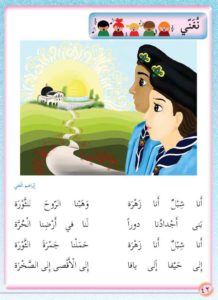
PALESTINIAN ELEMENATARY SCHOOL CURRICULUM 2016–17: RADICALIZATION AND REVIVAL OF THE PLO PROGRAM
This IMPACT-se report examines the 2016–17 Palestinian Authority school curriculum, focusing on elementary school grades 1-4. To a greater extent than the 2014–15 textbooks, the curriculum teaches students to be expendable martyrs, rejects negotiations, demonizes and denies the existence of Israel and focuses on a “return” to an exclusively Palestinian homeland.

NEIGHBORS AND RIVALS: CHINA IN TURKEY’S EDUCATIONAL SYSTEM
In July 2015, protesters throughout Turkey burned China’s flag, along with effigies of the late Chinese leader Mao Zedong. On the same day, a group of Turkish Ultra-nationalists and Islamists gathered in central Istanbul to protest the alleged restrictions on Uyghur religious freedom in China.
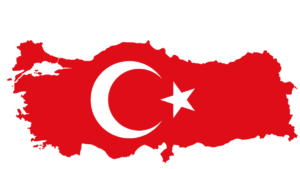
TURKEY’S CURICULUM UNDER ERDOGAN: THE EVOLUTION OF TURKISH IDENTITY
This well-timed report monitors Turkish school textbooks published since the AKP’s (Justice and Development Party) rise to power from 2002–15, with special emphasis on recent years (2013–15). The report examined 117 school textbooks covering subjects in the humanities, science, religious instruction and civics.

PALESTINIANS IN ISRAELI TEXTBOOKS: 2016 UPDATE
This timely report updates Impact’s analysis of the Israeli School Children current Israeli educational curriculum, particularly as it relates to the Palestinian people and the Palestinian educational process. It is based on the review of 123 state and state-religious textbooks, which were approved and recommended by the Israeli Ministry of Education through the 2017 school year.

Against the backdrop of the ongoing US–Israel–Iran war, IMPACT-se examines how Iran’s national curriculum and school textbooks provide a lens into the threat the regime poses not only to the US, Israel, and the West, but also to regional actors across the Middle East and to its own civilian population.
The analysis shows how Iran’s education system advances the regime’s Khomeinist ideology, presenting nuclear dominance and the glorification of jihadist leaders as central to its national and religious identity.
By analyzing curriculum content and educational messaging, the article raises urgent questions about how state education furthers the regime’s intentions and what this may mean for the long-term stability of the Middle East.

Khaleej Times
Khaleej Times — Nov 26, 2026
An article in Khaleej Times reports on new research presented in Abu Dhabi showing that UAE students are more receptive to values of to
lerance and coexistence than their teachers, highlighting the need for stronger educator training. The piece features commentary from IMPACT-se’s Policy Director, Felicity Ginsburg, who points to regional examples as models for fostering long-standing traditions of shared society and mutual understanding. Read the full article here.
 Daily News Hungary — Jan 11, 2026
A recent Daily News Hungary article features IMPACT-se’s latest report on Hungarian textbooks, commending their comprehensive and balanced coverage of history and modern society. The article highlights IMPACT-se’s finding that the textbooks align with UNESCO standards for education promoting tolerance and mutual understanding. Read the full article here.

eureporter — February 26, 2025
IMPACT-se’s latest research, conducted in partnership with the Ruderman Family Foundation, reveals that Azerbaijan, Uzbekistan, and Kazakhstan overwhelmingly reject radical ideologies in their curricula and foster tolerance toward Jews and Israel. These findings have been highlighted in an op-ed emphasizing the critical role of education in shaping Central Asia’s geopolitical future.
The findings, particularly from IMPACT-se’s Azerbaijan Textbook Report, demonstrate how education is being used as a bridge between East and West. Azerbaijan’s textbooks present Judaism alongside Islam and Christianity, reinforcing an inclusive national identity. As geopolitical alliances shift, IMPACT-se’s research underscores the importance of fostering education systems that promote mutual understanding and strengthen ties with the West.
Read the full op-ed here.

NYPost Op-Ed— June 8, 2024
In an opinion piece in the NY Post, IMPACT-se CEO Marcus Sheff discusses our latest report on Saudi Arabian textbook reforms, placing these changes within a broader regional context. The latest report highlights the Kingdom’s proactive steps toward eradicating extremist content and fostering a curriculum that better emphasizes peace and tolerance. Sheff’s analysis underscores Saudi Arabia’s efforts to align with global educational standards, positioning the country as a leader in curriculum reform in the Middle East.
Read the full article here.
 CNN Interview Highlights — Jan. 29, 2024
Talking to CNN’s Jake Tapper, Marcus Sheff, CEO of IMPACT-se, discusses the organization’s pivotal role in presenting analysis and research on UNRWA’s educational failures. Highlighting IMPACT-se’s recent findings, he highlights examples of hate-teaching in UNRWA schools, the dangerous impact on students and the urgent need for curricula that promote peace and tolerance.
WATCH the full interview here for an in-depth look at IMPACT-se’s work and ongoing efforts: CNN Interview with Marcus Sheff.

FOX News (Benjamin Weinthal) – November 7, 2023
IMPACT-se’s work is featured in a FOX News article. The piece discusses IMPACT-se’s recent report documenting support for the October 7 Massacre among UNRWA teachers and other staff members, describing specific instances of hate-teaching and glorification of terrorism. IMPACT-se CEO Marcus Sheff is cited calling to review UNRWA funding, stating that “Time and again we have warned that UNRWA staff and school materials have created a breeding ground for terror.”

Le Monde— July 16, 2023
Le Monde quotes IMPACT-se’s latest report on Saudi Arabia, in an article discussing Crown Prince Mohammed Ben Salman’s refounding of the history of the kingdom.

CNN — June 19, 2023
IMPACT-se’s work is featured in a CNN article on Saudi Arabia’s quiet work to moderate subjects ranging from gender roles to the promotion of peace and tolerance. IMPACT-se reports and ongoing work in the region are cited as the major impetus for the changes, which CEO Marcus Sheff states “are an encouraging sign that progress may include attitudes toward Israel and Zionism.”

Times of Israel – November 22, 2022
IMPACT-se’s work is featured in a Times of Israel article on the United Arab Emirates’ decision to integrate the teaching of the Holocaust into its primary and secondary education, in the wake of the 2020 Abraham Accords. IMPACT-se was cited as an organization which has played a key role in assessing the content of the UAE curriculum in recent years, which CEO Marcus Sheff states is “head and shoulders” above others in the region, and in offering guidance based on UNESCO-derived standards of peace and tolerance in education.

L’Express — November 10, 2022
IMPACT-se’s work is featured in L’Express, a French weekly news magazine. The article cites our most recent research on Russia/Ukraine, Iran, and the Gulf, exploring how school textbooks play a crucial role in fostering hatred, and even violence. Alternatively, it also looks at how such textbooks promote peace and tolerance, especially in conflict zones where discourse has considerable potential to contribute to violent escalation, or to conflict transformation. The article addresses the preparation of young minds for war with Ukraine, Iranian public opposition to teaching hate, and surprising advances in Gulf curricula.

Haaretz — August 25, 2022
The latest IMPACT-se report evaluating 12 history textbooks from the Russian and Ukrainian national curricula was covered by Haaretz. The IMPACT-se report found that Russian textbooks delegitimize the Ukrainian government, accusing them of being corrupt and elitist. Ukrainian nationalism is described as being an extension of Western interests, and cite Ukraine’s involvement in the Holocaust to claim that Ukrainian nationalism is inextricably linked with Nazism. Ukrainian textbooks describe contentious historical events with more objectivity, and aim to instill patriotism in students. However, Russia is portrayed solely as an aggressor that has impeded Ukrainian sovereignty throughout history. Ukraine’s collaboration with the Nazis is depicted as serving the aims of their nationalist movement, with no acknowledgment of involvement in atrocities such as the Babi Yar massacre of Jews.

International Policy Digest — Jan. 3, 2022
School curricula present a double-edged sword in analyses of the complex relationship between education and the processes of radicalization. On the one hand, curricula can be instrumentalized to favor intolerant, hateful ideologies that endanger the prospect of regional normalization in the Middle East. On the other hand, curricula can just as powerfully be used to promote a more peaceful future based on ideals of mutual respect and tolerance. In this article, IMPACT-se textbook research reports on Saudi Arabia and Qatar are referenced to discuss this complex relationship.

Eurasia Review — Dec. 13, 2021
The civil war in Yemen has now raged since 2014, centered around the conflict between the Houthis and the internationally recognized Republic of Yemen Government. Among deep concerns for the fate of Yemen and the importance of its role in a larger campaign by Iran for influence and power, there are growing worries about the changes in Yemeni education systems. This article discusses egregious violations of UNESCO standards taught in Houthi educational materials that were found in a 2021 IMPACT-se report.

The National Interest — Dec. 1, 2021
Recent reports from IMPACT-se have highlighted shifts in a crucial area of the reformist agenda heralded by the Saudi Arabian government regarding education policy. IMPACT-se reports, particularly one from 2021 and another from 2020, are used to exemplify the dramatic progress of Saudi textbooks revisions toward moderation of curricula content.

The Washington Post — Jan. 30, 2021
IMPACT-se’s research on the new 2020 Saudi Arabian curriculum is covered, including the removal of an infamous hadith that called for Muslims to fight and kill all Jews on the Day of Judgement and a section that supported capital punishment for homosexual relationships. The article notes that IMPACT-se’s earlier report on the previous Saudi curriculum was highly critical, and was presented to the Royal Court and Saudi Ministry officials with detailed changes that should be made. IMPACT-se CEO Marcus Sheff says in the article that the new 2020 textbooks show Saudi Arabia has demonstrated a concerted effort to make content more moderate. A State Department official told the Post, “We are encouraged by the positive changes in influential textbooks used throughout Saudi Arabia.” ADL’s David Weinberg is quoted as saying, “Finally, after years of unremarkable changes, they’ve finally excised some of the hate and incitement in very real ways [although] there is still a very heavy focus on enmity with Israel and Zionism.” Sheff said that textbooks have an overwhelming influence in the Middle East, where students see their curriculum as communicating messages formulated by the state. “There is an understanding of the direct link between textbooks’ power to radicalize young people. And it works the other way around: Textbooks have this power to act as a barrier to radicalization.”

The New York Times — Jan. 19, 2021
The New York Times quoted IMPACT-se’s report on the updated Saudi curriculum today as evidence of significant progress in the Kingdom, in a wider piece about the potential relationship between Saudi Arabia and the new US administration. The article suggests the textbook report findings point to Saudi Arabia going through a process of modernization, which might ease tensions with a Saudi-critical President Biden. The report cited the recent review of Saudi textbooks by IMPACT-se, which found that most of the material deemed anti-Semitic had been taken out, as had text praising jihad and saying gays and lesbians should be punished with death and noted many changes since its previous report last year. Marcus Sheff, the group’s chief executive, told the Times in an interview that the Saudis were moving in the right direction, and faster than they had before. “This curriculum is not free from of hate, not free of incitement,”he said, “but Saudi Arabia has clearly made a concerted effort, an institutional effort, to modernize the curriculum.”

The Telegraph — December 16, 2020
Hardline Islamist and anti-Semitic content has been removed from Saudi Arabia’s curriculum, according to a new report, in what researchers say marks a historic shift in attitudes in the Gulf Kingdom. A study of the latest Saudi teaching materials found that official state textbooks – distributed to 30,000 schools in Saudi Arabia and abroad – no longer contained calls for non-believers and gay men to be punished by death, nor the anti-Semitic conspiracy theory that Jews control the world. Marcus Sheff, Chief Executive of IMPACT-SE, which has reviewed official textbooks since 2003, said that in previous years, lessons had been heavily influenced by Wahhabism, a puritanical form of Sunni Islam, including “very radical” content. “The latest textbooks reflect a real leap forward and an institutional effort to remove some references to hate, including anti-Semitism, jihad, and homophobia,” he said. “There is more work to be done, but these revisions are a real cause for optimism.” Note: Telegraph has Paywall Complete Article HERE

Time — December 15, 2020
Students in Saudi Arabia, like so many around the world, have traded in-person classrooms for logging onto an app during the COVID-19 pandemic. But they’re also experiencing other major shifts in Saudi Arabia’s official, country-wide curriculum, with new reforms stripping out lessons of hatred toward the “other”—whether Christian, Jewish, or gay—and dictats to defend the Islamic faith through violence. The Kingdom’s latest batch of textbooks has for the first time removed sections calling for non-believers to be punished by death, and predicting an apocalyptic final battle in which Muslims will kill all Jews, according to a report released Tuesday by a Jerusalem-based think tank that analyzes global curricula for extremist and intolerant views. The “trend line is cause for optimism,” says Marcus Sheff, CEO of the nonprofit Institute for Monitoring Peace and Cultural Tolerance in School Education, or IMPACT-se. “We do see a significant change … a real institutional effort … at the highest levels to make a change to modernize the curriculum to remove offense.”

Newsweek — September 25, 2020
On September 14th, Secretary of State Mike Pompeo and his Qatari counterpart signed an accord on cultural exchanges to advance what the State Department lauded as the countries’ “shared ideals of tolerance and diversity.” The Institute for Monitoring Peace and Cultural Tolerance in School Education (IMPACT-se) has issued the most extensive study ever on Qatar’s official school curriculum with regard to topics of peace and tolerance, and the results are sobering. Its findings indicate that Qatar’s textbooks are on par with those issued by Iran, Saudi Arabia and the Palestinian Authority as the worst in the region, and perhaps the world, with regard to government-published antisemitism and other forms of hate. The results of IMPACT-se’s new study are especially striking when viewed according to the rubric of the Anti-Defamation League’s new toolkit for assessing antisemitic tropes: “Antisemitism Uncovered: A Guide to Old Myths in a New Era.” The Qatari textbooks investigated by IMPACT-se propagate nearly all of the antisemitic tropes identified by ADL’s guide: power, disloyalty, greed, deicide, blood libel, Holocaust denial and anti-Jewish slanders that are framed as critiques of Zionism or Israeli policy.

Al Arabiya — September 13, 2020
The Institute for Monitoring Peace and Cultural Tolerance in School Education (IMPACT-se) recently reviewed 238 Qatari textbooks from the last four academic years. It also reviewed textbooks from the UAE’s “Moral Education” curriculum—a government initiative launched in 2016 for public and private schools in the country. The organization found glaring differences between how the two Gulf countries are teaching young people about people of different religions and backgrounds. While IMPACT-se concluded that Qatar’s “curriculum does not meet international standards of peace and tolerance,” it found UAE’s Moral Education curriculum “aligns with UNESCO standards and UN declarations.” “I would describe the Qatar curriculum as falling short of UNESCO standards in school education,” said IMPACT-se CEO Marcus Sheff in an interview with Al Arabiya English, while the Moral Education curriculum introduces UAE students to “the values of tolerance and respect for themselves, and others, both national and global.”

EU Reporter — May 18, 2020
The European Parliament passed three resolutions which condemn the Palestinian Authority (PA) for continuing to teach hate and violence in its school textbooks and which oppose European Union aid to the PA being used for this purpose. German MEP Niclas Herbst of the European People’s Party stressed that “EU funds should be spent on peace and mutual understanding. Paying teachers to teach anti-Semitism and incitement to violence through Palestinian schoolbooks should never be subsidized by EU-money. The result of votes today is a strong signal on this regard.” Marcus Sheff, CEO of IMPACT-se noted that EU officials told the group that its [pending] report on Palestinian curriculum will be classified. “There now must be a moment of truth for the European Union. Will it continue to ignore the parliament that oversees its spending? Will the commission now publicly release the freshly- minted report on the Palestinian Authority’s textbooks? Governments, legislators and over a million Palestinian children know what’s in the textbooks. Classifying the report is senseless and frankly, seems highly suspicious,” he said. IMPACT-se Report

Time — February 10, 2020
A recent Time Magazine article published on February 10, under the headline, “Saudi Arabia Rebuffs Trump Administration’s Requests to Stop Teaching Hate Speech in Schools,” lays out IMPACT-se’s main findings in it’s recent report on the Saudi Arabian curriculum, including the persistence of anti-Semitism in the textbooks. IMPACT-se presented the Saudi textbook report and policy recommendations at the White House, National Security Council, State Department, and Congress along with the ADL, a leader in researching Saudi textbooks and presenting policy recommendations to the U.S. Administration. IMPACT-se also presented its report to top European officials.

FDD/LWJ — March 30, 2020
Following up on several recent studies of the Saudi curriculum by ADL, the Institute for Monitoring Peace and Cultural Education in School Textbooks (IMPACT-se) just completed a longer, comprehensive review of Saudi textbooks since 2016, using standards for peace and tolerance outlined by UNESCO as a benchmark. The results are eye-opening. In some respects, progress has been made. Yet, on the other hand, the latest Saudi curriculum remains plagued by intolerance. In essence, the latest Saudi curriculum seems to be something of a contradiction. On the one hand, there appears to be a real attempt to move away from jihadism. On the other, deep and destructive prejudices remain, including those that are used by extremists to justify religious violence against people demonized as the Other. Although the kingdom has undertaken rapid reforms in several other areas—such as expanding women’s rights and curtailing the abusive religious police—the kingdom’s rulers have yet to show that they are giving similar priority to the urgent removal of incitement from government-published textbooks.

Aftenposten — November 12, 2019
An article on the new PA curriculum by Norway’s leading newspaper follows a report and visit to Oslo by IMPACT-se last week to meet legislators of every major political party, as well as with senior leaders at the Norwegian Ministry of Foreign Affairs. Said IMPACT-se CEO MS: “While Norwegian taxpayers fund the new and radical Palestinian curriculum, their diplomats were on the ground, working with the PA during its creation. It should have been screamingly obvious to the Norwegian diplomats in Ramallah two years ago that they had a problem…” Socialist Party member and leader of “Friends of Palestine in Parliament” MP Petter Eide, while objecting to aid being held back, said, the new curriculum is “problematic” and that it will “make it more difficult for the Palestinians to secure international aid in the future.”

Jewish News (via TOI) — Sept. 15, 2019
A major government review into incitement and anti-Semitism in Palestinian textbooks that was due to have been completed this month has only just begun. Following research on the PA curriculum by IMPACT-se, the Department for International Development (DfID) announced the review with the European Union six months ago, saying it would be complete by September 2019. The reason given for the six-month delay was due to a change in the Palestinian Education Minister and to contractual negotiations between the EU and the Georg Eckert Institute for International Textbook Research, tasked with carrying out the work.

Al-Akhbar — June 11, 2019
Top Arabic network, Al-Akhbar, has claimed that IMPACT-se is changing curricula across the Middle East, according to a June 11th print and internet think piece (English translation) which covers IMPACT-se’s reports, legislative work in the European Parliament and joint project with Prof. Mohammed Dajani Daoudi’s Wasatia Institute.

The Algemeiner — March 14, 2019
IMPACT-se said it will be working with Professor Mohammed Dajani Daoudi of the WASATIA Academic Institute (WAI) to “promote Wasatia education for the Palestinian educational system.” A jointly published booklet identified five “problematic categories” within current Palestinian textbooks: [encouragement] to violence; subliminal violent messaging; demonization of the Other; indoctrination to militancy; and degradation of women.
“It is hoped that the Palestinian Authority will revise its curriculum along the lines of the international standards for peace education presented here,” Daoudi wrote.

EuroNews — May 22, 2019
The European Union will fund a study on Palestinian school textbooks “with a view to identifying possible incitement to hatred and violence and any possible lack of compliance with UNESCO standards of peace and tolerance in education,” EU Commission Vice-President Federica Mogherini told European lawmakers. The announcement follows a damning report by IMPACT-se, a Jerusalem-based watchdog, which reviewed selected examples from the new Palestinian school curriculum for the 2018–19 academic year and concluded the material was “more radical than those previously published.”

SonntagsZeitung — Jan. 6, 2019
“School materials that run contrary to the spirit of a two-state solution, which glorify violence, which fuel racism and anti-Semitism or trivialize violations of international law and human rights are not in compliance with the Swiss position on the Middle East,” said a spokeswoman of the [Swiss] Foreign Office (EDA). “Switzerland will examine reports such as those by IMPACT-se and discuss them with other donor nations.” Eng. Translation

The New York Times — Sept. 18, 2017
Following a report last year by Impact-se, which analyzed 117 school textbooks in Turkey and concluded that the curriculum taught human rights, was open to Darwin, gender equality, the protection of the environment, compassion toward AIDS patients and various lifestyles, critics have now challenged the overhaul of more than 170 curriculum topics by the government of President Recep Tayyip Erdogan, “representing a frontal assault on the country’s already fragile tradition of secularism.” The author of the IMPACT-se report, Dr. Hay Yanarocak, said the new changes showed, “Turkey is changing its direction and is no longer, by default, a Western state.”
European Textbooks: Hungary Review
Our study discusses the presentation of Jews, Judaism and related topics in Hungarian state-approved textbooks. It reveals that Hungary’s curriculum includes extensive content on Jewish history, including the historic role of Israel and the Jewish contribution to Hungary. The Holocaust is covered in depth and personalized through individual stories, while the Hebrew word “Shoah” is even used to reference the Holocaust. Antisemitism is placed in appropriate context and explored through vivid examples including local blood libels. Meanwhile, the Israeli-Palestinian conflict is presented accurately and objectively across textbooks – Some even highlight the expulsion of Jews from Arab states, which is rarely addressed in European curricula.
Click here to view the report.
Our report on Greek textbooks shows an accurate and respectful approach to Judaism, Jewish tradition and the Holocaust. The study finds that the curriculum reflects Greece’s commitment to international standards for peace and tolerance education.
Judaism is presented with balance and care within Religious Education textbooks, including lessons on the Torah, Jewish festivals, and beliefs. The Holocaust is taught with exceptional depth, most notably in a Grade 12 History textbook that devotes a full chapter to the genocide, includes survivor testimonies, and highlights the courage of Greek citizens and clergy who protected Jewish communities during the war.
The report notes positive curriculum updates, including the removal of antisemitic and unbalanced material from a Junior High School textbook, reflecting a commitment toward fairness and accuracy. However, the study also identifies areas for further development. Antisemitism itself is not directly addressed, and prewar Greek Jewish life, Zionism, and the establishment of Israel receive little attention. Expanding on these themes would further strengthen the Greek curriculum.
Our comprehensive review of the Palestinian Authority’s 2025–26 national school curriculum, analyzes 290 textbooks and 71 teacher guides used in West Bank, Gaza, and East Jerusalem schools (including UNRWA). The study finds the materials substantively unchanged from prior editions and documents recurring patterns across subjects: promotion of jihad and martyrdom, glorification of terrorism, incitement of antisemitism, rejection of peacemaking and the two-state solution, and erasure of Israel from maps.The report notes these themes across subjects, including science and math textbooks, in which violence is normalized. Meanwhile, language exercises and teacher guides include narratives that idealize armed struggle and present historical figures who perpetrated deadly attacks on civilians as role models. Overall, the findings provide an evidence-based portrait of the current curriculum’s content, themes, and classroom guidance.
The findings reveal that while isolated passages promote civic virtues, the broader picture is troubling. Violent jihad and martyrdom are valorized—even in language lessons, gender content is paternalistic, while antisemitic stereotypes recur. These patterns raise concerns about how Iraq’s education system addresses tolerance, diversity, and gender equality—and about continued non-compliance with international standards
Our Pakistan report presents an in-depth analysis of 86 government-approved textbooks used across Punjab, Sindh, and federal school boards, covering a range of subjects and grade levels. This comprehensive review examines how these materials address themes such as diversity, coexistence, gender equality and democracy.
While some lessons do encourage tolerance and mutual respect, particularly in isolated sections, the review found that many textbooks still fall significantly short of UNESCO-based standards for promoting peace, respect, and anti-incitement. They frequently sideline non-Muslims and foster hostility towards specific groups such as Jews and Pakistan’s neighbor India. Routinely, religious content is integrated into non-religious subjects, with jihad often framed as armed struggle or defense.
IMPACT-se’s updated report on Indonesia’s textbooks provides an important barometer in assessing the direction of the world’s fourth most populous country. The study analyzes Indonesia’s most recent Merdeka Curriculum and compares it with the previous 2013 Curriculum. The findings reveal a significant shift toward inclusivity and tolerance. The new curriculum highlights minority religions and indigenous belief systems as essential to Indonesia’s national identity. It also presents a more balanced portrayal of Jews and Judaism, eliminating problematic content from earlier editions, and promotes greater interfaith understanding. With a population of 240 million and growing geopolitical relevance, Indonesia’s education system plays a key role in shaping both the country and beyond.
This report examines over forty Nigerian textbooks for Grades 1‑12 in subjects including Civic Studies, Social Studies, History, Islamic and Christian Religious Studies, published between 2014 and 2024. Evaluated against UNESCO-based benchmarks, these texts frame peace and democracy as civic virtues, emphasize tolerance, and acknowledge historical interfaith harmony. Yet, contradictions arise, with endorsements of harsh penalties, corporal punishment, and omission of significant human rights issues. Nigeria’s pluralism is showcased through references to ethnic diversity, languages, and traditions, though smaller groups like the Isoko and Tiv remain underrepresented. Textbooks criticize British colonialism for cultural imposition while also advocating international cooperation, presenting a nuanced historical perspective. Gender representation emphasizes women’s roles but frequently frames equality within male authority, marginalizes girls, and condemns LGBTQ+ identities.
IMPACT‑se’s France Textbook Review—part of our eight‑country Europe research program—examines how Jews, Judaism, Israel and antisemitism are portrayed across the national history curriculum (Grades 4–9) and leading high school textbooks (Grades 10–12), measuring alignment with UNESCO standards for peace and tolerance.
While the report finds solid content on Jewish-related themes including antisemitism, the Holocaust and Israel, it also highlights gaps that obscure the fuller story of Jewish life. In particular, there is room for expansion on Jewish contributions to French society, Napoleon’s Jewish emancipation and Vichy collaboration during the Holocaust. Due to France’s strict separation of state and religion, Jewish content is included only in historical and civic contexts.
France hosts Europe’s largest Jewish community (about 446,000 people), but antisemitic incidents have surged—from 436 in 2022 to 1,676 in 2023—and high‑profile attacks such as the 2012 Toulouse school shooting and the 2015 Hypercacher supermarket massacre underscore the importance of accurate education.
IMPACT-se’s latest review of Jordan’s 2024–2025 national curriculum finds a troubling regression in content related to peace, tolerance, and coexistence. While Jordan’s textbooks cite the Amman Message and emphasize religious harmony between Christians and Muslims, the curriculum continues to reinforce extreme antisemitic tropes, justify violence against Israel, and portray the peace treaty with Israel in a negative light. Notably, a newly introduced textbook downplays and legitimizes Hamas’s October 7 attack, falsely presenting it as a response to Israeli actions while omitting the murder of over 1,100 Israeli civilians. Israel’s existence continues to be erased from maps, while Zionism is framed as a racist colonial conspiracy. The Holocaust is entirely absent from history lessons.
Additionally, the curriculum contains new content promoting intolerance towards women and LGBTQ+ individuals, labeling homosexuality as a threat to humanity and reinforcing rigid, discriminatory gender roles. Despite Jordan’s long-standing diplomatic relations with Israel, its educational materials fail to align with UNESCO standards of peace and tolerance, instead promoting division, hostility, and extremist narratives.
Israel and Jews in Kazakhstan’s Education
IMPACT-se’s latest report offers a nuanced look at over 100 Kazakhstani school textbooks used from Grades 2 to 11, examining how they portray Jews, Judaism, Israel, and the Arab-Israeli conflict.
The findings reflect Kazakhstan’s commitment to promoting religious and cultural tolerance. Judaism is introduced respectfully as part of the country’s multicultural makeup, with textbooks highlighting Jewish beliefs, rituals, scripture, and contributions to global civilization.
Students are encouraged to value interfaith harmony, and there are clear efforts to distinguish religious conservatism from extremism. Textbooks also acknowledge antisemitism and the Nazi genocide of Jews, though key terminology such as “Holocaust,” “concentration camps,” and “ghetto” is absent—signaling a need to deepen Holocaust education.
Portrayals of Israel vary: while upper-grade books offer thoughtful, even admiring accounts (including Israel’s revival of Hebrew), others contain inaccuracies and one-sided framing of the Arab-Israeli conflict. The report recognizes a strong foundation for promoting peace and inclusion in Kazakhstan’s education system, while encouraging further alignment with international standards of tolerance and historical accuracy.
The Palestinian Authority’s (PA) newly introduced “abridged curriculum” for Gaza condenses the same radical, antisemitic, and violence-promoting content that has long characterized its textbooks. This report by IMPACT-se examines the new educational material, revealing that far from fostering an environment of peace and coexistence, the PA’s abridged textbooks continue to glorify terrorism, incite hatred, and erase Israel from maps.
The abridged curriculum was introduced as part of a remote-learning initiative following the war in Gaza, allowing students to complete two academic years in one. However, despite this restructuring, the educational materials remain largely unchanged in substance, perpetuating incitement and failing to meet the standards of peace, tolerance, and mutual respect set by UNESCO.
IMPACT-se’s latest report provides a detailed analysis of the content in Gaza’s newly condensed textbooks, along with an assessment of the educational environment in reopened schools. The findings highlight that radicalization is still deeply embedded in Palestinian education, contradicting repeated assurances by the PA that it is working toward reform.
A Review of Hay’at Tahrir al-Sham’s Intended Changes to the Syrian Curriculum
IMPACT-se’s latest report uncovers informative changes in Syria’s education system following the takeover by Hay’at Tahrir al-Sham (HTS). The new regime has initiated textbook reforms, replacing nationalistic and Assad-era content with an increasingly Islamized framework. While the removal of Assad’s influence signals a political shift, the reforms increasingly embed religious doctrine into the curriculum, potentially altering Syria’s educational trajectory. The changes reframe history through an Islamist lens, modify references to the Ottoman Empire, and eliminate nationalistic studies entirely.
At the same time, antisemitic material remains unchanged, continuing to vilify Jews and Israel. Despite some efforts to neutralize terminology surrounding the 1973 war, the curriculum still promotes narratives that foster division and intolerance. Additionally, the removal of female figures from textbooks signals a regression in gender representation. These concerning shifts raise timely questions about the future of Syria’s education system and its adherence to international standards of peace and tolerance.
IMPACT-se’s latest research, conducted in collaboration with INSS, examines the potential of a Pan-Abrahamic approach to transforming education in the Middle East and North Africa. The report highlights how regional curricula have long struggled with radical narratives, exclusionary national identities, and the marginalization of minorities, including Jews and Israel. By fostering a shared educational framework rooted in the Abrahamic tradition, there is an opportunity to replace hostility with mutual recognition and regional unity. The study examines historical influences shaping MENA curricula, including nationalistic ideologies and Islamist perspectives, and contrasts them with emerging efforts at peace education. While the Abraham Accords have laid the groundwork for reconciliation, education remains a critical missing piece in solidifying a future of coexistence. The report identifies both challenges and opportunities in aligning regional education with international standards of peace and tolerance. Report
This IMPACT-se report examines the significant strides in reforming Egypt’s school textbooks for the 2023–24 academic year, with 80% of students now studying revised materials that better promote standards of peace and tolerance. Notable improvements include greater recognition of historic Jewish presence in Egypt and an emphasis on respect for diversity, religious coexistence, and a moderate vision of Islam in younger grades.The curriculum highlights positive narratives about Jews and Judaism, portrays Israel as a legitimate peace partner in the context of the Egypt-Israel peace accords, and promotes values of tolerance, sustainable development, and inclusion. However, unrevised textbooks in higher grades still contain problematic content, including antisemitic stereotypes and hostility towards Israel, signaling the need for continued reform.These ongoing reforms demonstrate Egypt’s commitment to fostering a more inclusive educational environment while addressing remaining challenges to ensure a curriculum that fully aligns with international standards. Report
Updated Review of Saudi Textbooks 2023-24
This IMPACT-se report on the 2023-24 Saudi Arabian textbooks examines curricular changes over the past five years. A comprehensive review of 371 textbooks published between 2019 and 2024 reveals shifts towards peace and tolerance per UNESCO standards. Negative portrayals of infidels and polytheists, and depictions of Shi’a and Sufi practices as heretical have decreased. Problematic examples promoting jihad and martyrdom have been removed or altered, and there are notable improvements in gender representation and reduction of homophobic content, although traditional gender roles and the prohibition of cross-dressing remain. The curriculum shows a strong dedication to the Palestinian cause, though with revised portrayals of Israel and Zionism, eliminating content that previously defined Zionism as a “racist” movement. Despite these changes, Israel is still not recognized on maps, references to “Palestine” have been reduced, the Holocaust is absent, and Israel is referred to as “Israeli occupation” or “Israeli occupiers” regarding the 1948 War.
European Textbooks: Ireland Review
This IMPACT-se report examines Irish school textbooks and reveals concerning misrepresentations of the Holocaust, Judaism, and Israel. Among the findings, the Holocaust is minimized, with Auschwitz incorrectly referred to as a “prisoner of war camp,” diluting its historical reality. Textbooks are often hostile towards Israel and include questions that imply Jewish values are not aligned with peace. Additionally, Judaism is portrayed as condoning violence to promote justice, contrasting with peaceful depictions of other religions. These findings underscore the need for curriculum reform to foster accurate, balanced, and respectful education. This report is the first in a new Europe-wide program assessing textbook portrayals across eight selected countries.
The Portrayal of Jews and Israel in Muslim and Arab Textbooks: Major Trends
This special publication, produced in collaboration with INSS by IMPACT-se Head of Research Eldad Pardo and Research Associate Dr. Yonatan Negev, explores the portrayal of Jews and Israel in textbooks from Muslim and Arab countries across the Middle East, North Africa, Azerbaijan, and Indonesia. The depiction of Jews varies from negative stereotypes influenced by traditional and modern antisemitism, to occasional positive references acknowledging the respect given to the “Israelites” by the Prophet Muhammad. Israel is mostly portrayed negatively, especially in relation to the Palestinian conflict. Meanwhile, there is little mention of the Holocaust or the history of indigenous Jews in the region. While textbooks might be free from anti-Jewish content but still contain anti-Israel material, the reverse is not seen. The study also finds that countries which deviate from promoting a moderate and inclusive educational vision tend to include more delegitimizing rhetoric against Jews and Israel. Conversely, those striving for curricula that emphasize peace and tolerance often reduce radical discourse against Jews and Israel.
CLASHING NARRATIVES AND IDENTITIES IN IRAQ’S SCHOOL CURRICULUM
This IMPACT-se report offers a comprehensive insight into 71 textbooks from the Republic of Iraq’s national school curriculum, dated 2015-2022, for grades 1-12. Our findings showed that textbooks continue the largely conservative ideas which originate from Saddam Hussein’s rule (1979-2003) and earlier, only partially reflecting modern-day developments in Iraq since the 2003 war. The study addresses the complex depictions of violent jihad and martyrdom, terrorism, and gender roles. The curriculum presents a muted approach to regional and global issues, with notable exceptions including negative descriptions of the United States in a historical context. The portrayal of Jews, Judaism and Israel occupies a central focus, and reflects a deep animosity towards these topics.
Arabs and Palestinians in Israeli Textbooks 2022‒23
This IMPACT-se report offers an insight into major themes relating to Arabs and Palestinians in government-approved, Hebrew-language Israeli school textbooks covering civics, geography, Hebrew studies, history, homeland, society and civics, Israel studies, Jewish thought, and Jewish-Israeli culture. The research explores how specific lessons, images and exercises portray and shape attitudes toward Palestinians and Arabs from various backgrounds within Israeli society and the greater region. It evaluates the presentation of the Arab-Israeli and Israeli-Palestinian conflicts, the peace process, and Arab and Palestinian Other—living either as citizens of Israel, in Jerusalem, the West Bank, the Gaza Strip, and elsewhere. This analysis looks at 107 textbooks taught at state and state-religious schools approved by the Israeli Ministry of Education for the 2022–23 academic year.
A Look at Gender Representation and LGBT-Inclusive Education in Israeli Textbooks
This brief on LGBT education in Israel examines two of the nine areas IMPACT-se reviews during textbook analysis – ‘Gender Identity and Representation,’ and ‘Sexual Orientation.’ The teaching of LGBT materials is afforded lesser importance in the curriculum: such content is generally not included in textbooks, and is instead provided as online supplementary materials. Nonetheless, education on LGBT identity is provided in the Ministry of Education-approved, mandatory “Life Skills” Program, which advocates for acceptance, tolerance, empathy, and responsibility toward the Other. This is available on the Ministry of Education website, is mandatory, and has been prepared in collaboration with an LGBTQ non-profit organization.
Israel and Jews in Egyptian Textbooks – A Forward-Looking Perspective
This report is co-authored by Dr Eldad Pardo, IMPACT-se Director of Research and Dr. Ofir Winter, Senior Researcher at the Institute for National Security Studies. The report provides a comprehensive study on school curricula in Egypt in light of recent regional developments, including the Hamas attack on Israel on 7 October. In the knowledge that textbooks can serve as a useful and instructive tool for researchers seeking to understand the vision of a country’s leadership in the medium and long term, this report uses the lens of Egyptian education as an indicator of future trends, in particular towards Israel-Egypt relations.
Between Conservatism and Reforms: The Dual Nature of Al-Azhar’s School Curriculum
This report offers a first-of-its kind insight into the curriculum taught at the influential Al-Azhar religious seminary in Egypt. The institute operates a separate K-12 school system that publishes its own textbooks and teaches them alongside those of the Egyptian national curriculum, which IMPACT-se researched in April. The study evaluated 63 textbooks across grades 7–12, spanning many genres of classical Islamic literature: Qur’an commentary, hadith, jurisprudence, Islamic history and culture, grammar, and rhetoric. Our findings reveal a strong emphasis on combating radical Islam, while still promoting adherence to traditional Islamic beliefs and texts.
UNRWA Education: Textbooks and Terror—November 2023
With this damning report, documenting support for the October 7 Massacre among UNRWA teachers and other staff members, IMPACT-se uncovers evidence of the connection between the content of textbooks taught in UNRWA schools and the atrocities committed on October 7, reflecting years of hate-teaching in these schools. It further reveals that at least 100 Hamas members committing the terror attacks are graduates of UNRWA’s education system, whose textbooks include content that encourages antisemitism, glorifies violence and promotes militant jihad. English French
Updated Review of Saudi Textbooks 2022–23
IMPACT-se’s latest review of the Saudi national curriculum evaluates the 2022–23 school year, and any changes made compared to previous editions. The report covers the entire humanities corpus over the last five years, totaling 301 textbooks, and including 80 textbooks for the current 2022–23 school year. Our findings reveal an overall trend of improvement and reform, building on the gradual removal of problematic content in Saudi textbooks since IMPACT-se’s 2020 report. A significant number of examples teaching harmful material on Jews and Christians, violent jihad, gender, and homosexuality have been removed, and negative portrayals of infidels have been moderated.
IMPACT-se’s most comprehensive report to date on the Egyptian national school curriculum, evaluated 271 textbooks published between 2018 and 2023. The study focuses on Arabic language, Islamic and Christian religious education, social studies, Values and Respect for the Other, history, geography, philosophy, and more. The research comes amid an ongoing year-by-year reform of the Egyptian national curriculum between 2018 and 2030 across all grades (as yet up to grade 5), and found that the reformed curriculum shows highly positive change thus far.
UNRWA Education: Reform or Regression
A joint IMPACT-se/United Nations Watch report concerning incitement to hate and violence by UNRWA teachers and schools, is being presented on Tuesday, March 14 to Congress. The report uncovers 47 new cases of incitement by UNRWA staff, in breach of the agency’s stated policies of zero tolerance for racism, discrimination, or antisemitism in its schools and educational materials. Teachers and schools at the UN agency that runs education and social services for Palestinians regularly call for the murder of Jews, and create teaching materials that glorify terrorism, encourage martyrdom, demonize Israelis, and incite antisemitism.
The Moroccan Curriculum: Education in the Service of Tolerance
This IMPACT-se report offers a first-of-its-kind insight into 127 textbooks from the Kingdom of Morocco’s national school curriculum, published between 2013 and 2022. Our research found that the Moroccan curriculum largely adheres to UNESCO standards of peace and tolerance: textbooks promote the centrality of peace and tolerance to Moroccan identity, society and foreign policy, alongside democracy, human and civil rights. The curriculum places an emphasis on women’s issues, as well as the history and traditions of the indigenous Amazigh population. Morocco’s Jewish community is frequently and warmly represented. Textbooks discuss European colonialism and contemporary foreign policy, as well as Morocco’s territorial integrity.
Unity in Diversity: The Indonesian Curriculum
This IMPACT-se report offers a first-of-its-kind insight into the Indonesian curriculum for grades 1–12. The research explores how specific lessons, images and exercises portray and shape attitudes toward international relations, officially recognized and non-recognized religions, gender equality, local languages and cultures, and ethnic minorities. It evaluates the ways in which the state philosophy of Pancasila promotes national values of unity within diversity; religious and social harmony; humility; the importance of local wisdom; and respect toward other nations. This analysis looks at 169 textbooks taught in the Standard Public Track, schools run by the Indonesian Ministry of Education, which make up 85 percent of all students.
Iran’s Radical Education: An Interim Update Report, 2021–22
IMPACT-se’s updated Iran report analyzed new sets of textbooks in the Iranian curriculum created for the current 2021–22 academic year. The findings indicate a greater degree of radicalization than in previous IMPACT-se reports. Findings show that the Islamic Republic’s curriculum provides educational content that continues to teach students about the prospect of a global struggle to spread the Islamist-Khomeinist revolution from as early as the first grade. The world is divided between followers of Iran’s global revolution and those who oppose it. Students are taught that Arab proxy militias are part of the Iranian regime and core to its goals. A central tenet of the curriculum is aimed at equipping the military forces of the country. Students are taught that they are constantly under threat, most notably from the United States. As is the case with prior reports, antisemitism remains rife, classic antisemitic tropes are used to describe Zionism as a wealthy ring of evil Jewish capitalists looking to control the world for malicious gain.
Review of Changes and Remaining Problematic Content in 2021–2022 Qatari Textbooks
IMPACT-se’s latest review of the Qatari curriculum evaluates changes made in fall and spring semester textbooks for 2021–22. Over the last two years, Qatar’s textbooks have slowly improved with adjustments made toward moderation, including lessons on tolerance and racial discrimination. Significant progress was observed in removing antisemitic and anti-Christian content as well as examples of violent jihad. While the curriculum still disproportionately focuses on Israel, the hostile tone is lessened. Other problematic content remains, including antisemitic material, violent interpretations of jihad, hateful material against infidels and polytheists, demonization of Israel, and rejection of Arab-Israeli normalization.
Review of Changes and Remaining Problematic Content in Saudi Textbooks 2021–22
IMPACT-se has released its 2022 annual update on Saudi textbooks, depicting an overall trend of improvement following major reforms since 2020. Whereas only a decade ago, focus was put on encouraging students to prepare for jihad and martyrdom, the majority of references to violent jihad justifying and praising violence and murder on behalf of the Prophet Muhammad have now been removed from the textbooks. And while some problematic content such as negative depictions of Jews, Zionism and Christians remain or have even been made worse, others, particularly instances of the kind of antisemitism based on modern European tropes, have largely been removed.
The Emirati Curriculum 2016–21, Grades 1–12—Selected Examples
This IMPACT-se report provides a list of 134 selected examples from 220 textbooks in the United Arab Emirates’ national curriculum, between 2016–21. The examples illustrate the findings of our latest research report, “When Peace Goes to School: The Emirati Curriculum 2016-2021,” presenting lessons on peace, tolerance, and cooperation with the world and non-nationals, which are taught to be closely associated with prosperity and national identity. The language and moral education programs especially encourage cultural diversity, curiosity, and happiness. Additionally, the Abraham Accords are taught, and anti-Israeli material has been moderated. The research did not find antisemitism or incitement to violence, and UNESCO guidelines for peace and tolerance are generally met.
WHEN PEACE GOES TO SCHOOL: The Emirati Curriculum 2016–21
This IMPACT-se report evaluates the UAE’s national curriculum for the 2021–22 academic school year. Among the findings: The curriculum teaches that prosperity and national pride are closely associated with peace and tolerance. There is a realistic approach to peace and security with a priority on peacemaking. Language and moral education programs encourage cultural diversity, curiosity and happiness. Students prepare for a highly competitive world and are taught positive thinking and well-being. The Abraham Accords are taught and anti-Israeli material has been moderated. UNESCO guidelines for peace and tolerance are generally met.
Review of Changes and Remaining Problematic Content in Qatari Textbooks 2021-22 Fall Editions Grades 1–12
This new IMPACT-se report evaluates changes made in the Qatari fall semester textbooks for 2021–22. The report found that the Qatar curriculum continues a trend of slow improvement since our reports in August 2020 and June 2021, by removing additional disturbing and unacceptable passages previously criticized in IMPACT-se’s reports. However, passages that demonize Jews, praise martyrdom, and blame holy faiths for corrupting holy texts remain. Although some changes are suggestive of positive movement, a great deal of improvement is necessary to align the curriculum with international standards of Peace and Tolerance.
A FURTHER STEP FORWARD: Review of Changes and Remaining Problematic Content in Saudi Textbooks 2021–22
This latest IMPACT-se report on the Saudi Curriculum shows further dramatic improvements to Saudi Arabia’s school textbooks, continuing the significant changes seen in mid-2020 and documented in IMPACT-se’s last Saudi textbook report. Over the last year, textbooks have been moderated in several key areas. The greatest changes have been made to lessons dealing with Jews, Christians, non-believers, and violent jihad; twenty-eight lessons featuring demonization of the Other and religious intolerance were removed or heavily modified. While problematic material remains in Saudi textbooks, these represent profound changes in these categories.
UNDERSTANDING QATARI AMBITION: The Curriculum 2016–20 (Updated)
This updated IMPACT-se report continues to focus on Qatar’s school curriculum for grades 1–12. The study builds upon previous IMPACT-se research within the prism of UNESCO standards and other UN and international declarations, recommendations and documents relating to education for peace and tolerance. Our review determined that the Qatari curriculum does not yet meet those international standards. Textbooks teach Qatari children to accept others different than themselves and advocate for peace while at the same time echoing antisemitic canards and reinforcing the Qatari regime’s support for Islamist terror organizations. Despite a slight movement away from radical jihadism, much remains. Nevertheless, Qatar’s curriculum remains heavily influenced by Western educators—displaying the Qatari gift for embracing contradictions.
The 2020–21 PALESTINIAN SCHOOL CURRICULUM GRADES 1–12—SELECTED EXAMPLES
This updated May 2021 IMPACT-se study analyzed textbooks used for the 2020-21 Palestinian curriculum (West Bank, Gaza, East Jerusalem and UNRWA) and includes selected examples from the research of 222 textbooks. Of those, 105 textbooks have not changed at all and remain as they were in 2019. Essentially, there were that no substantive positive changes made to the current Palestinian curriculum. Textbooks remain openly antisemitic and continue to encourage violence, jihad and martyrdom while peace is still not taught as preferable or even possible.
REVIEW OF HOUTHI EDUCATIONAL MATERIALS IN YEMEN_2015–19
The Ansar Allah Houthis, have penetrated the mainstream Yemeni education system as part of a campaign to spread their influence over the region. This exclusive IMPACT-se report reviews materials produced by the Houthis for use in its network of summer camps and extra-curricular classes as well as take-home materials including a monthly children’s “educational” magazine called Jihad. As an Iranian proxy, the Houthi materials mimic much of the Khomeinist rhetoric of that regime and represent some of the more egregious violations of UNESCO standards of peace and tolerance among current Middle Eastern education.
THE ERDOGAN REVOLUTION IN THE TURKISH CURRICULUM TEXTBOOKS
Turkish President Recep Tayyip Erdogan has made significant changes to Turkey’s state-approved school textbooks since taking power in 2003. This report is the fourth undertaken by IMPACT-se into the Turkish curriculum. We have identified a marked deterioration in Turkish textbooks since our last review in 2016, in regards to meeting UNESCO defined standards of peace and tolerance. On the contrary, textbooks have been weaponized in Erdogan’s attempts to Islamize Turkish society and to hark back to a nostalgic age of Turkish domination.
REVIEW OF UNRWA-PRODUCED STUDY MATERIALS IN THE PALESTINIAN TERRITORIES
PA school textbooks have consistently shown a systematic insertion of violence, martyrdom and jihad across all grades and subjects. Yet, it is this material that is taught in UNRWA-run schools throughout the Palestinian Territories of the Gaza Strip and West Bank as well as Jerusalem. Our research shows that UNRWA, as a UN organization, knowingly produces and teaches material in its Gaza Strip and West Bank schools that are rife with problematic content that contradicts stated UN values. UNRWA’s lack of transparency to address such problematic issues make it impossible to evaluate the effectiveness of any efforts it claims to have made. Updated Research of post-November material shows hate remains.
REVIEW OF SAUDI TEXTBOOKS 2020–21
This follow-up report of Saudi 2020-21 textbooks by IMPACT-se shows that while many problematic examples have been removed from the curriculum, some still remain. The removal of the problematic content however, should certainly be seen as a significant improvement and an encouraging development, representing a step toward moderation. Our sense is that the Saudi kingdom, along with some other countries in the region, is gradually moving in a direction that could bring it in line with UNESCO-derived standards of peace and tolerance—contingent on whether the remaining issues are addressed.
UNITED ARAB EMIRATES—Moral Education Textbooks
This preliminary IMPACT-se report focuses on the United Arab Emirates’ “Moral Education” curriculum, taught in all Emirates public and private schools, from grades 1-12. The research covered the textbooks and teacher guides that make up the “Character and Morality” section of the UAE curriculum, measured against IMPACT-se’s UNESCO-derived standards of peace and tolerance. While the current research covers only this limited spectrum of the UAE curriculum, it is noteworthy that the content goes a long way to incorporate the values of peace and tolerance into a traditional education system. This stand-alone course is unique in the region and may reflect UAE’s emerging leadership in the reform of textbooks.
UNDERSTANDING QATARI AMBITION—The Curriculum 2016–20
IMPACT-se’s interim review of 238 textbooks of the Qatari curriculum for the calendar years 2016-20, used international standards for peace and tolerance. The curriculum appears to be in in a change-mode, moving in a direction from jihadi radicalism toward open engagement with the world. While somewhat less radical than previous versions, the process of moderation is in its infancy. Some particularly offensive material has been removed after decades of radical propaganda in Qatari schools, but while heavily influenced by Western educators, serious issues remain regarding peace and tolerance. Interim Report Exec Sum Centrality of Antisemitism in the Qatari Curriculum Problematic Content in the Qatari Curriculum_Selected Examples
THE WINDING ROAD TO A NEW IDENTITY Saudi Arabian Curriculum 2016-19
The Saudi curriculum, at this stage, should be viewed as a reflection of the efforts being made to transform an exclusively traditionalist Islamic society into one that incorporates more Western economic values and its pre-Islamic heritage. However while the curriculum tries to evolve with such inherent contradictory elements, the radical orthodoxy of the Wahhabis remains dominant. The narrowing of the gap between the kingdom’s modernization goals and their practical application—both within the curriculum and throughout Saudi society—is in the beginning stages of a work in progress.
PALESTINIAN CURRICULUM PUT TO THE TEST The General Certificate of High School Examination in Palestine (Tawjihi)
This report studies the twenty-six tests comprising the Palestinian 2019 Tajihi Matriculation Exam which tests grade 12 material from the Palestinian curriculum. The exam was analyzed according to IMPACT-se’s UNESCO-derived standards for peace and tolerance in school education. IMPACT-se’s finding is that many of the final exams are so designed that students must study problematic content that does not meet international standards for peace and tolerance.
PEACE AND CONFLICT IN ISRAEL STATE-APPROVED TEXTBOOKS: 2000–2018
The article describes the peace and conflict educational approaches found in the Jewish-Israeli curricula between the years 2000–17, and extracts the dominant themes and messages towards Muslim, Arab and Palestinian “others.” Study findings indicate that current Israeli textbooks do not contain any overt racism or incitement against Palestinians. However, ethnocentric perceptions and victim mentality are two themes that still dominate curricular discourse and are counterproductive to peace education goals.
THE REJECTION OF PEACE: References to Peace Agreements, Israel, and Jews, Now Removed from PA Curriculum
A report on selected positive content about peace, relations with Israel, and Jewish historical presence previously in the Palestinian curriculum between 2000 and 2016, now removed from the 2016–19 curriculum. Although some of the positive examples were removed even before 2016, the “new” PA curriculum represents a quantum leap backward toward radicalizing the textbooks—and unfortunately— Palestinian children.
THE NEW PALESTINIAN CURRICULUM: BY THE NUMBERS Quantitative Analysis of the Current Palestinian Ministry of Education Curriculum
A quantitative analysis of textbooks from the current Palestinian Ministry of Education curriculum, applying UNESCO-derived standards of peace and tolerance. Additionally, in this report, we define Problematic Content as: violent connotations, incitement to violence, hatred of the Other, and radical, inappropriate or disturbing content. The accompanying graph from the report displays by grade, the number of violent references included in each textbook.
JORDAN’S NEW CURRICULUM: The Challenge of Radicalism
IMPACT-se evaluates a range of topics: moderating the education of Islam for students (with emphasis on diversity and openness); layers of national identity; the idea of good citizenship, which includes gender, economic and environmental responsibility; Jordan’s approach toward the West Bank and the Palestinians; unresolved internal conflict toward its peace with Israel and compassion toward the disadvantaged.
TWO LANGUAGES ONE COUNTRY: Turkey’s Elective Kurdish Curriculum
The Kurdish textbooks appear at first glance to be simple and straightforward, no more than very little elective training in a minority population’s mother tongue . . . a conversation about this curriculum is worthwhile because the question of Kurdish education in Turkey remains unanswered.
WASATIA EDUCATION: Exploring the Palestinian Curriculum
This booklet suggests Wasatia Education for the Palestinian educational system using the methodologies of both IMPACT-se and the WASATIA Academic Institute. It explores the present Palestinian school textbooks and identifies areas where the curriculum incites, demonizes and delegitimizes the Other while proposing concepts and values to allow for a future of coexistence, tolerance and prosperity.
THE NEW PALESTINIAN CURRICULUM: 2018-19 Update–Grades 1-12
IMPACT-se’s latest research portrays a Palestinian curriculum that accommodates the full spectrum of extreme nationalist and Islamist ideologies in both Gaza and the West Bank, including anti-Semitic motifs amid themes of continuous struggle. heroism and martyrdom.
SYRIAN NATIONAL IDENTITY: Reformulating School Textbooks during the Civil War
For seven consecutive years a brutal civil war has been raging in Syria. This study of the Syrian curriculum examines the updated 2017–18 education contents in the areas controlled by the Assad regime while the civil war con-tinues to rage. It offers a unique look at a people in the midst of a mortal crisis.
REFORM or RADICALIZATION: PA 2017 Curriculum [A Preliminary Review]
With the first full reform of the Palestinian curriculum since 2000, IMPACT-se, in its second of three reports, covers sixty-six textbooks from the new PA curriculum of 2017–18 for Grades 5–11. Further research will provide a full assessment of the new curriculum covering Grades 1–12. Selected Examples (Updated)
HAREDI EDUCATION IN ISRAEL: REINFORCING THE BARRICADES
IMPACT-se researches textbooks used in the Haredi curricula to promote a unique and separate cultural identity while keeping contact with Israeli culture to a minimum. Though it fails to meet all of the UNESCO standards, Haredi education nevertheless offers some unique characteristics and advantages worth examining.
PALESTINIAN ELEMENATARY SCHOOL CURRICULUM 2016–17: RADICALIZATION AND REVIVAL OF THE PLO PROGRAM
This IMPACT-se report examines the 2016–17 Palestinian Authority school curriculum, focusing on elementary school grades 1-4. To a greater extent than the 2014–15 textbooks, the curriculum teaches students to be expendable martyrs, rejects negotiations, demonizes and denies the existence of Israel and focuses on a “return” to an exclusively Palestinian homeland.
NEIGHBORS AND RIVALS: CHINA IN TURKEY’S EDUCATIONAL SYSTEM
In July 2015, protesters throughout Turkey burned China’s flag, along with effigies of the late Chinese leader Mao Zedong. On the same day, a group of Turkish Ultra-nationalists and Islamists gathered in central Istanbul to protest the alleged restrictions on Uyghur religious freedom in China.
TURKEY’S CURICULUM UNDER ERDOGAN: THE EVOLUTION OF TURKISH IDENTITY
This well-timed report monitors Turkish school textbooks published since the AKP’s (Justice and Development Party) rise to power from 2002–15, with special emphasis on recent years (2013–15). The report examined 117 school textbooks covering subjects in the humanities, science, religious instruction and civics.
PALESTINIANS IN ISRAELI TEXTBOOKS: 2016 UPDATE
This timely report updates Impact’s analysis of the Israeli School Children current Israeli educational curriculum, particularly as it relates to the Palestinian people and the Palestinian educational process. It is based on the review of 123 state and state-religious textbooks, which were approved and recommended by the Israeli Ministry of Education through the 2017 school year.

Against the backdrop of the ongoing US–Israel–Iran war, IMPACT-se examines how Iran’s national curriculum and school textbooks provide a lens into the threat the regime poses not only to the US, Israel, and the West, but also to regional actors across the Middle East and to its own civilian population. The analysis shows how Iran’s […]

This report examines how Jordanian and Egyptian school textbooks address homosexuality and gender non-conformity. Through analysis of religious and language curricula, it shows how textbook narratives often reflect prevailing social and religious norms rather than state law, highlighting the role of education in transmitting societal attitudes. Please find the paper here.

This paper by Matan Perchikov illustrates how the UAE curricula mobilize both Arab cultural and local national heritage, as well as Islamic religious tradition, to reinforce messages of peace and tolerance. In particular, the paper highlights the importance of introducing Moral Education as a distinct subject and the pedagogic approach of Islamic Education textbooks. By […]

According to UNESCO-derived standards of education, one critical element in assessing a curriculum is the presentation of peace and conflict resolution as a value in education. The overall aim of these standards is to create a more tolerant environment for students worldwide, where they learn the values of peace, respect, tolerance, and democratic principles. Conflict […]

As the new school year begins, countries across the Middle East have been undertaking ambitious educational reforms, reflecting wider social and political transformations. These reforms have not emerged in a vacuum. Curriculum changes have become a central tool in shaping national identity and preparing students for modern challenges. Globally, curricula are continually revised and reformed […]


Poland’s political landscape has experienced significant changes in recent years. In the 2023 parliamentary elections, the opposition coalition, led by Donald Tusk’s Civic Coalition, secured a majority, ending the eight-year rule of the conservative Law and Justice (PiS) party. This transition marked a shift towards more liberal policies and a renewed emphasis on strengthening ties […]
Egypt’s political landscape remains complex, shaped by a combination of domestic priorities and international influences. Under President Abdel Fattah el-Sisi, the government has emphasized investment in education. However, political constraints and limited democratic space often challenge the implementation of reforms. The government faces significant challenges in modernizing its education system while addressing entrenched issues. The […]

South Korea’s plan to introduce AI-powered digital textbooks in schools has sparked concerns about children’s overexposure to digital devices and potential misinformation. While the government aims to shift to more innovative, personalized education using AI, critics argue that the rollout has not addressed potential negative effects. Despite these concerns, many teachers support the initiative, though […]

Morocco’s Minister of Education announced that all Moroccan children will study the minority Amazigh language by 2029. The ministry confirmed the creation of 600 new training spots for Amazigh language teachers in December 2023, up from 400 in 2022.Currently, Amazigh is taught in 1,803 primary schools, serving approximately 746,000 students across the country. The ministry […]

India’s National Council of Educational Research and Training (NCERT) has announced it will introduce new textbooks which include content on electoral literary, and will update existing textbooks to incorporate this material. The goal is to address voter apathy among young people, and Indians living in urban areas. These measures, which will begin in years 6–12 […]

The country’s Ministry of Education this week unveiled new history textbooks with sections about what it calls the “special military operation” in Ukraine, the annexation of Crimea and Western sanctions. Critics say the move is a part of a sustained effort to indoctrinate school children and stifle any independent thinking. The new textbooks endorse this […]

The recent gut-wrenching story of the Jewish student at a Launceston school subjected to antisemitic and Nazi abuse is just the tip of the iceberg. For Jewish students, public schools in Australia are not what you would imagine. Antisemitic bullying is alive and well, and these terrible forces are gaining traction. The frightening reality is […]

The underground school in suburban Kabul began in July this year, one of 50 set up by women’s rights activists, months after the Taliban regime in Afghanistan disallowed school for girls studying in classes 7 and above. In the Taliban’s interpretation of Islam, there is no sawaab in educating girls. While women have so far […]

In respect to UNRWA’s latest statement on our report reviewing UNRWA-branded school materials, labeled for use in 2022, below is an executive summary. Given that UNRWA chose to reach out in its statement to IMPACT-se for guidance on the reviewed material, we felt compelled to provide additional information. Although not within the scope of our […]

Amin and his family fled Syria ten years ago, when the conflict broke out. He was just a baby when they arrived to Jbeil, Lebanon. When he was seven, Amin first joined JRS’s activities. Today, at 10 years old, he attends the JRS learning support program at Nicolas Kluiters Centre (NKC) in the morning and […]

Affo, 29, was born in a polygamous family comprising more than two dozen children. He is the second child to have obtained a high school degree but the only one to have gone to university. For his seven years at high school, he had to balance his studies with part-time jobs to pay tuition fees […]

“Afghanistan’s education system has been devastated by more than three decades of sustained conflict. For many of the country’s children, completing primary school remains a distant dream—especially in rural areas and for girls—despite recent progress in raising enrollment.In the poorest and remote areas of the country, enrollment levels vary extensively and girls still lack equal […]

Pakistani student Mah Jabeen credits a new public bus system in her home city with saving her from being stuck at her parents’ house doing chores – or even having to get married. Thanks to the Bus Rapid Transit system in the northwestern city of Peshawar, Ms. Jabeen said she had been able to continue […]

Seven years into a deadly and devastating war, thousands of Yemeni parents are using what little they have left to fight for an untold victim of the country’s conflict: their childrens’ education. Ahmed Mahdi, 50, is one of them. The father of three drives a taxi in Yemen’s Houthi rebel-held capital city of Sana’a. He […]
A brightly decorated wooden trolley rumbles down a little-used rail track in the southern Philippines carrying four young teachers—two on the front and two in the back—pushing it along with their feet. Kitted out with a whiteboard, colorful charts, and a stack of books, the tiny, mobile school slides along from village to village three […]

Behind a yellow door in an alley blanketed by snow, 25 girls sit on the floor, huddled in coats and headscarves, in front of a white board. “What are you doing?” the teacher asks in English. “I am a student!” they chant in unison. Their plastic shoes that are piled outside the door are a […]

When President Isaac Herzog flies to the United Arab Emirates on Sunday, marking the first official visit of an Israeli president to the Gulf state, he will be welcomed by the man who is arguably the Middle East’s most effective educational reformer. According to The New York Times, Crown Prince Mohamed bin Zayed Al Nahyan, […]

Turkish elites often see Kurds as posing a mortal threat to their homeland’s territorial integrity. Kurdish elites often harbor pan-Kurdish dreams of their own. The rise to power of Erdogan’s Islamist Justice and Development Party (AKP) in 2002 appeared to imply a watershed, bringing about a measure of cultural liberalization toward the Kurds. More Islam […]

Students from the Henry and Marilyn Taub Faculty of Computer Science at the Technion recently developed a voice-recognition app for the “Madrasa” project to help people learn Arabic. Part of the Madrasa project—which advocates for better communication in Israeli society through spoken Arabic courses—the app includes a voice recognition feature that will allow tens of […]
When the Egyptian Parliament recently considered a bill intended to support the use of Standard Arabic, the discussion grew heated between a a representative of Al-Azhar and a parliamentarian who objected to provisions about Quran memorization in primary school. Modern Standard Arabic is the formal dialect of the wider Arabic language, which there are now […]
It is a great pleasure to write Impact’s first blog on the new site. The organization was initially set up with the limited objective of monitoring whether the 1993 Oslo Accord between Israel and the Palestinian Authority was being supported by a positive change in the education of Palestinian children, namely promoting mutual acceptance, mutual […]
eureporter — February 26, 2025
IMPACT-se’s latest research, conducted in partnership with the Ruderman Family Foundation, reveals that Azerbaijan, Uzbekistan, and Kazakhstan overwhelmingly reject radical ideologies in their curricula and foster tolerance toward Jews and Israel. These findings have been highlighted in an op-ed emphasizing the critical role of education in shaping Central Asia’s geopolitical future.
The findings, particularly from IMPACT-se’s Azerbaijan Textbook Report, demonstrate how education is being used as a bridge between East and West. Azerbaijan’s textbooks present Judaism alongside Islam and Christianity, reinforcing an inclusive national identity. As geopolitical alliances shift, IMPACT-se’s research underscores the importance of fostering education systems that promote mutual understanding and strengthen ties with the West.
Read the full op-ed here.
NYPost Op-Ed— June 8, 2024
In an opinion piece in the NY Post, IMPACT-se CEO Marcus Sheff discusses our latest report on Saudi Arabian textbook reforms, placing these changes within a broader regional context. The latest report highlights the Kingdom’s proactive steps toward eradicating extremist content and fostering a curriculum that better emphasizes peace and tolerance. Sheff’s analysis underscores Saudi Arabia’s efforts to align with global educational standards, positioning the country as a leader in curriculum reform in the Middle East.
Read the full article here.
CNN Interview Highlights — Jan. 29, 2024
Talking to CNN’s Jake Tapper, Marcus Sheff, CEO of IMPACT-se, discusses the organization’s pivotal role in presenting analysis and research on UNRWA’s educational failures. Highlighting IMPACT-se’s recent findings, he highlights examples of hate-teaching in UNRWA schools, the dangerous impact on students and the urgent need for curricula that promote peace and tolerance.
WATCH the full interview here for an in-depth look at IMPACT-se’s work and ongoing efforts: CNN Interview with Marcus Sheff.
FOX News (Benjamin Weinthal) – November 7, 2023
IMPACT-se’s work is featured in a FOX News article. The piece discusses IMPACT-se’s recent report documenting support for the October 7 Massacre among UNRWA teachers and other staff members, describing specific instances of hate-teaching and glorification of terrorism. IMPACT-se CEO Marcus Sheff is cited calling to review UNRWA funding, stating that “Time and again we have warned that UNRWA staff and school materials have created a breeding ground for terror.”
Le Monde— July 16, 2023
Le Monde quotes IMPACT-se’s latest report on Saudi Arabia, in an article discussing Crown Prince Mohammed Ben Salman’s refounding of the history of the kingdom.
CNN — June 19, 2023
IMPACT-se’s work is featured in a CNN article on Saudi Arabia’s quiet work to moderate subjects ranging from gender roles to the promotion of peace and tolerance. IMPACT-se reports and ongoing work in the region are cited as the major impetus for the changes, which CEO Marcus Sheff states “are an encouraging sign that progress may include attitudes toward Israel and Zionism.”
Times of Israel – November 22, 2022
IMPACT-se’s work is featured in a Times of Israel article on the United Arab Emirates’ decision to integrate the teaching of the Holocaust into its primary and secondary education, in the wake of the 2020 Abraham Accords. IMPACT-se was cited as an organization which has played a key role in assessing the content of the UAE curriculum in recent years, which CEO Marcus Sheff states is “head and shoulders” above others in the region, and in offering guidance based on UNESCO-derived standards of peace and tolerance in education.
L’Express — November 10, 2022
IMPACT-se’s work is featured in L’Express, a French weekly news magazine. The article cites our most recent research on Russia/Ukraine, Iran, and the Gulf, exploring how school textbooks play a crucial role in fostering hatred, and even violence. Alternatively, it also looks at how such textbooks promote peace and tolerance, especially in conflict zones where discourse has considerable potential to contribute to violent escalation, or to conflict transformation. The article addresses the preparation of young minds for war with Ukraine, Iranian public opposition to teaching hate, and surprising advances in Gulf curricula.
Haaretz — August 25, 2022
The latest IMPACT-se report evaluating 12 history textbooks from the Russian and Ukrainian national curricula was covered by Haaretz. The IMPACT-se report found that Russian textbooks delegitimize the Ukrainian government, accusing them of being corrupt and elitist. Ukrainian nationalism is described as being an extension of Western interests, and cite Ukraine’s involvement in the Holocaust to claim that Ukrainian nationalism is inextricably linked with Nazism. Ukrainian textbooks describe contentious historical events with more objectivity, and aim to instill patriotism in students. However, Russia is portrayed solely as an aggressor that has impeded Ukrainian sovereignty throughout history. Ukraine’s collaboration with the Nazis is depicted as serving the aims of their nationalist movement, with no acknowledgment of involvement in atrocities such as the Babi Yar massacre of Jews.
International Policy Digest — Jan. 3, 2022
School curricula present a double-edged sword in analyses of the complex relationship between education and the processes of radicalization. On the one hand, curricula can be instrumentalized to favor intolerant, hateful ideologies that endanger the prospect of regional normalization in the Middle East. On the other hand, curricula can just as powerfully be used to promote a more peaceful future based on ideals of mutual respect and tolerance. In this article, IMPACT-se textbook research reports on Saudi Arabia and Qatar are referenced to discuss this complex relationship.
Eurasia Review — Dec. 13, 2021
The civil war in Yemen has now raged since 2014, centered around the conflict between the Houthis and the internationally recognized Republic of Yemen Government. Among deep concerns for the fate of Yemen and the importance of its role in a larger campaign by Iran for influence and power, there are growing worries about the changes in Yemeni education systems. This article discusses egregious violations of UNESCO standards taught in Houthi educational materials that were found in a 2021 IMPACT-se report.
The National Interest — Dec. 1, 2021
Recent reports from IMPACT-se have highlighted shifts in a crucial area of the reformist agenda heralded by the Saudi Arabian government regarding education policy. IMPACT-se reports, particularly one from 2021 and another from 2020, are used to exemplify the dramatic progress of Saudi textbooks revisions toward moderation of curricula content.
The Washington Post — Jan. 30, 2021
IMPACT-se’s research on the new 2020 Saudi Arabian curriculum is covered, including the removal of an infamous hadith that called for Muslims to fight and kill all Jews on the Day of Judgement and a section that supported capital punishment for homosexual relationships. The article notes that IMPACT-se’s earlier report on the previous Saudi curriculum was highly critical, and was presented to the Royal Court and Saudi Ministry officials with detailed changes that should be made. IMPACT-se CEO Marcus Sheff says in the article that the new 2020 textbooks show Saudi Arabia has demonstrated a concerted effort to make content more moderate. A State Department official told the Post, “We are encouraged by the positive changes in influential textbooks used throughout Saudi Arabia.” ADL’s David Weinberg is quoted as saying, “Finally, after years of unremarkable changes, they’ve finally excised some of the hate and incitement in very real ways [although] there is still a very heavy focus on enmity with Israel and Zionism.” Sheff said that textbooks have an overwhelming influence in the Middle East, where students see their curriculum as communicating messages formulated by the state. “There is an understanding of the direct link between textbooks’ power to radicalize young people. And it works the other way around: Textbooks have this power to act as a barrier to radicalization.”
The New York Times — Jan. 19, 2021
The New York Times quoted IMPACT-se’s report on the updated Saudi curriculum today as evidence of significant progress in the Kingdom, in a wider piece about the potential relationship between Saudi Arabia and the new US administration. The article suggests the textbook report findings point to Saudi Arabia going through a process of modernization, which might ease tensions with a Saudi-critical President Biden. The report cited the recent review of Saudi textbooks by IMPACT-se, which found that most of the material deemed anti-Semitic had been taken out, as had text praising jihad and saying gays and lesbians should be punished with death and noted many changes since its previous report last year. Marcus Sheff, the group’s chief executive, told the Times in an interview that the Saudis were moving in the right direction, and faster than they had before. “This curriculum is not free from of hate, not free of incitement,”he said, “but Saudi Arabia has clearly made a concerted effort, an institutional effort, to modernize the curriculum.”
The Telegraph — December 16, 2020
Hardline Islamist and anti-Semitic content has been removed from Saudi Arabia’s curriculum, according to a new report, in what researchers say marks a historic shift in attitudes in the Gulf Kingdom. A study of the latest Saudi teaching materials found that official state textbooks – distributed to 30,000 schools in Saudi Arabia and abroad – no longer contained calls for non-believers and gay men to be punished by death, nor the anti-Semitic conspiracy theory that Jews control the world. Marcus Sheff, Chief Executive of IMPACT-SE, which has reviewed official textbooks since 2003, said that in previous years, lessons had been heavily influenced by Wahhabism, a puritanical form of Sunni Islam, including “very radical” content. “The latest textbooks reflect a real leap forward and an institutional effort to remove some references to hate, including anti-Semitism, jihad, and homophobia,” he said. “There is more work to be done, but these revisions are a real cause for optimism.” Note: Telegraph has Paywall Complete Article HERE
Time — December 15, 2020
Students in Saudi Arabia, like so many around the world, have traded in-person classrooms for logging onto an app during the COVID-19 pandemic. But they’re also experiencing other major shifts in Saudi Arabia’s official, country-wide curriculum, with new reforms stripping out lessons of hatred toward the “other”—whether Christian, Jewish, or gay—and dictats to defend the Islamic faith through violence. The Kingdom’s latest batch of textbooks has for the first time removed sections calling for non-believers to be punished by death, and predicting an apocalyptic final battle in which Muslims will kill all Jews, according to a report released Tuesday by a Jerusalem-based think tank that analyzes global curricula for extremist and intolerant views. The “trend line is cause for optimism,” says Marcus Sheff, CEO of the nonprofit Institute for Monitoring Peace and Cultural Tolerance in School Education, or IMPACT-se. “We do see a significant change … a real institutional effort … at the highest levels to make a change to modernize the curriculum to remove offense.”
Newsweek — September 25, 2020
On September 14th, Secretary of State Mike Pompeo and his Qatari counterpart signed an accord on cultural exchanges to advance what the State Department lauded as the countries’ “shared ideals of tolerance and diversity.” The Institute for Monitoring Peace and Cultural Tolerance in School Education (IMPACT-se) has issued the most extensive study ever on Qatar’s official school curriculum with regard to topics of peace and tolerance, and the results are sobering. Its findings indicate that Qatar’s textbooks are on par with those issued by Iran, Saudi Arabia and the Palestinian Authority as the worst in the region, and perhaps the world, with regard to government-published antisemitism and other forms of hate. The results of IMPACT-se’s new study are especially striking when viewed according to the rubric of the Anti-Defamation League’s new toolkit for assessing antisemitic tropes: “Antisemitism Uncovered: A Guide to Old Myths in a New Era.” The Qatari textbooks investigated by IMPACT-se propagate nearly all of the antisemitic tropes identified by ADL’s guide: power, disloyalty, greed, deicide, blood libel, Holocaust denial and anti-Jewish slanders that are framed as critiques of Zionism or Israeli policy.
Al Arabiya — September 13, 2020
The Institute for Monitoring Peace and Cultural Tolerance in School Education (IMPACT-se) recently reviewed 238 Qatari textbooks from the last four academic years. It also reviewed textbooks from the UAE’s “Moral Education” curriculum—a government initiative launched in 2016 for public and private schools in the country. The organization found glaring differences between how the two Gulf countries are teaching young people about people of different religions and backgrounds. While IMPACT-se concluded that Qatar’s “curriculum does not meet international standards of peace and tolerance,” it found UAE’s Moral Education curriculum “aligns with UNESCO standards and UN declarations.” “I would describe the Qatar curriculum as falling short of UNESCO standards in school education,” said IMPACT-se CEO Marcus Sheff in an interview with Al Arabiya English, while the Moral Education curriculum introduces UAE students to “the values of tolerance and respect for themselves, and others, both national and global.”
EU Reporter — May 18, 2020
The European Parliament passed three resolutions which condemn the Palestinian Authority (PA) for continuing to teach hate and violence in its school textbooks and which oppose European Union aid to the PA being used for this purpose. German MEP Niclas Herbst of the European People’s Party stressed that “EU funds should be spent on peace and mutual understanding. Paying teachers to teach anti-Semitism and incitement to violence through Palestinian schoolbooks should never be subsidized by EU-money. The result of votes today is a strong signal on this regard.” Marcus Sheff, CEO of IMPACT-se noted that EU officials told the group that its [pending] report on Palestinian curriculum will be classified. “There now must be a moment of truth for the European Union. Will it continue to ignore the parliament that oversees its spending? Will the commission now publicly release the freshly- minted report on the Palestinian Authority’s textbooks? Governments, legislators and over a million Palestinian children know what’s in the textbooks. Classifying the report is senseless and frankly, seems highly suspicious,” he said. IMPACT-se Report
Time — February 10, 2020
A recent Time Magazine article published on February 10, under the headline, “Saudi Arabia Rebuffs Trump Administration’s Requests to Stop Teaching Hate Speech in Schools,” lays out IMPACT-se’s main findings in it’s recent report on the Saudi Arabian curriculum, including the persistence of anti-Semitism in the textbooks. IMPACT-se presented the Saudi textbook report and policy recommendations at the White House, National Security Council, State Department, and Congress along with the ADL, a leader in researching Saudi textbooks and presenting policy recommendations to the U.S. Administration. IMPACT-se also presented its report to top European officials.
FDD/LWJ — March 30, 2020
Following up on several recent studies of the Saudi curriculum by ADL, the Institute for Monitoring Peace and Cultural Education in School Textbooks (IMPACT-se) just completed a longer, comprehensive review of Saudi textbooks since 2016, using standards for peace and tolerance outlined by UNESCO as a benchmark. The results are eye-opening. In some respects, progress has been made. Yet, on the other hand, the latest Saudi curriculum remains plagued by intolerance. In essence, the latest Saudi curriculum seems to be something of a contradiction. On the one hand, there appears to be a real attempt to move away from jihadism. On the other, deep and destructive prejudices remain, including those that are used by extremists to justify religious violence against people demonized as the Other. Although the kingdom has undertaken rapid reforms in several other areas—such as expanding women’s rights and curtailing the abusive religious police—the kingdom’s rulers have yet to show that they are giving similar priority to the urgent removal of incitement from government-published textbooks.
Aftenposten — November 12, 2019
An article on the new PA curriculum by Norway’s leading newspaper follows a report and visit to Oslo by IMPACT-se last week to meet legislators of every major political party, as well as with senior leaders at the Norwegian Ministry of Foreign Affairs. Said IMPACT-se CEO MS: “While Norwegian taxpayers fund the new and radical Palestinian curriculum, their diplomats were on the ground, working with the PA during its creation. It should have been screamingly obvious to the Norwegian diplomats in Ramallah two years ago that they had a problem…” Socialist Party member and leader of “Friends of Palestine in Parliament” MP Petter Eide, while objecting to aid being held back, said, the new curriculum is “problematic” and that it will “make it more difficult for the Palestinians to secure international aid in the future.”
Jewish News (via TOI) — Sept. 15, 2019
A major government review into incitement and anti-Semitism in Palestinian textbooks that was due to have been completed this month has only just begun. Following research on the PA curriculum by IMPACT-se, the Department for International Development (DfID) announced the review with the European Union six months ago, saying it would be complete by September 2019. The reason given for the six-month delay was due to a change in the Palestinian Education Minister and to contractual negotiations between the EU and the Georg Eckert Institute for International Textbook Research, tasked with carrying out the work.
Al-Akhbar — June 11, 2019
Top Arabic network, Al-Akhbar, has claimed that IMPACT-se is changing curricula across the Middle East, according to a June 11th print and internet think piece (English translation) which covers IMPACT-se’s reports, legislative work in the European Parliament and joint project with Prof. Mohammed Dajani Daoudi’s Wasatia Institute.
The Algemeiner — March 14, 2019
IMPACT-se said it will be working with Professor Mohammed Dajani Daoudi of the WASATIA Academic Institute (WAI) to “promote Wasatia education for the Palestinian educational system.” A jointly published booklet identified five “problematic categories” within current Palestinian textbooks: [encouragement] to violence; subliminal violent messaging; demonization of the Other; indoctrination to militancy; and degradation of women.
“It is hoped that the Palestinian Authority will revise its curriculum along the lines of the international standards for peace education presented here,” Daoudi wrote.
EuroNews — May 22, 2019
The European Union will fund a study on Palestinian school textbooks “with a view to identifying possible incitement to hatred and violence and any possible lack of compliance with UNESCO standards of peace and tolerance in education,” EU Commission Vice-President Federica Mogherini told European lawmakers. The announcement follows a damning report by IMPACT-se, a Jerusalem-based watchdog, which reviewed selected examples from the new Palestinian school curriculum for the 2018–19 academic year and concluded the material was “more radical than those previously published.”
SonntagsZeitung — Jan. 6, 2019
“School materials that run contrary to the spirit of a two-state solution, which glorify violence, which fuel racism and anti-Semitism or trivialize violations of international law and human rights are not in compliance with the Swiss position on the Middle East,” said a spokeswoman of the [Swiss] Foreign Office (EDA). “Switzerland will examine reports such as those by IMPACT-se and discuss them with other donor nations.” Eng. Translation
The New York Times — Sept. 18, 2017
Following a report last year by Impact-se, which analyzed 117 school textbooks in Turkey and concluded that the curriculum taught human rights, was open to Darwin, gender equality, the protection of the environment, compassion toward AIDS patients and various lifestyles, critics have now challenged the overhaul of more than 170 curriculum topics by the government of President Recep Tayyip Erdogan, “representing a frontal assault on the country’s already fragile tradition of secularism.” The author of the IMPACT-se report, Dr. Hay Yanarocak, said the new changes showed, “Turkey is changing its direction and is no longer, by default, a Western state.”

From Classroom to Conflict: Iranian Textbooks and the Ideological Roots of the US-Iran-Israel War
/by Dan KoskyAgainst the backdrop of the ongoing US–Israel–Iran war, IMPACT-se examines how Iran’s national curriculum and school textbooks provide a lens into the threat the regime poses not only to the US, Israel, and the West, but also to regional actors across the Middle East and to its own civilian population. The analysis shows how Iran’s […]
When Education Diverges from Law: LGBTQ Narratives in Jordanian and Egyptian Textbooks
/by Madeleine FerrisThis report examines how Jordanian and Egyptian school textbooks address homosexuality and gender non-conformity. Through analysis of religious and language curricula, it shows how textbook narratives often reflect prevailing social and religious norms rather than state law, highlighting the role of education in transmitting societal attitudes. Please find the paper here.
UAE: A Unique Path for Teaching Tolerance
/by Madeleine FerrisThis paper by Matan Perchikov illustrates how the UAE curricula mobilize both Arab cultural and local national heritage, as well as Islamic religious tradition, to reinforce messages of peace and tolerance. In particular, the paper highlights the importance of introducing Moral Education as a distinct subject and the pedagogic approach of Islamic Education textbooks. By […]
Conflict resolution in sub-Saharan Africa
/by Madeleine FerrisAccording to UNESCO-derived standards of education, one critical element in assessing a curriculum is the presentation of peace and conflict resolution as a value in education. The overall aim of these standards is to create a more tolerant environment for students worldwide, where they learn the values of peace, respect, tolerance, and democratic principles. Conflict […]
Middle Eastern Curriculum Reform: a Window into National Values
/by Madeleine FerrisAs the new school year begins, countries across the Middle East have been undertaking ambitious educational reforms, reflecting wider social and political transformations. These reforms have not emerged in a vacuum. Curriculum changes have become a central tool in shaping national identity and preparing students for modern challenges. Globally, curricula are continually revised and reformed […]
Iran’s Radical Education and Its Implications for Conflict with Israel and Nuclear Talks
/by Madeleine FerrisRevolutionary change in Syria’s political system and its ripple effect on education
/by Madeleine FerrisPoland at the Crossroads: Political Shifts and Educational Reforms in a Changing Era
/by Madeleine FerrisPoland’s political landscape has experienced significant changes in recent years. In the 2023 parliamentary elections, the opposition coalition, led by Donald Tusk’s Civic Coalition, secured a majority, ending the eight-year rule of the conservative Law and Justice (PiS) party. This transition marked a shift towards more liberal policies and a renewed emphasis on strengthening ties […]
Egypt’s Ongoing Reforms: A Catalyst for Change, But More to Achieve
/by Madeleine FerrisEgypt’s political landscape remains complex, shaped by a combination of domestic priorities and international influences. Under President Abdel Fattah el-Sisi, the government has emphasized investment in education. However, political constraints and limited democratic space often challenge the implementation of reforms. The government faces significant challenges in modernizing its education system while addressing entrenched issues. The […]
South Korea’s plan for AI textbooks hit by backlash
/by Layla JaffeSouth Korea’s plan to introduce AI-powered digital textbooks in schools has sparked concerns about children’s overexposure to digital devices and potential misinformation. While the government aims to shift to more innovative, personalized education using AI, critics argue that the rollout has not addressed potential negative effects. Despite these concerns, many teachers support the initiative, though […]
Education Minister Announces Amazigh Language to be Taught to All Moroccan Children by 2029
/by Morocco World NewsMorocco’s Minister of Education announced that all Moroccan children will study the minority Amazigh language by 2029. The ministry confirmed the creation of 600 new training spots for Amazigh language teachers in December 2023, up from 400 in 2022.Currently, Amazigh is taught in 1,803 primary schools, serving approximately 746,000 students across the country. The ministry […]
India to Combat Youth Voter Apathy Through School Textbooks
/by The Hindu Bureau— The HinduIndia’s National Council of Educational Research and Training (NCERT) has announced it will introduce new textbooks which include content on electoral literary, and will update existing textbooks to incorporate this material. The goal is to address voter apathy among young people, and Indians living in urban areas. These measures, which will begin in years 6–12 […]
Russia’s Latest Effort to Sway Young Minds: High-School Textbooks Praising the Conflict in Ukraine
/by Ivana Kottasová and Uliana Pavlova - CNNThe country’s Ministry of Education this week unveiled new history textbooks with sections about what it calls the “special military operation” in Ukraine, the annexation of Crimea and Western sanctions. Critics say the move is a part of a sustained effort to indoctrinate school children and stifle any independent thinking. The new textbooks endorse this […]
‘Frightening Antisemitic Abuse is on the Rise in Australian Schools’
/by Dr. Dvir Abramovich - news.com.auThe recent gut-wrenching story of the Jewish student at a Launceston school subjected to antisemitic and Nazi abuse is just the tip of the iceberg. For Jewish students, public schools in Australia are not what you would imagine. Antisemitic bullying is alive and well, and these terrible forces are gaining traction. The frightening reality is […]
‘Will I Be Illiterate’? In Taliban’s Afghanistan, Girls Fight Back—Attend Secret Classes, Refuse to Disappear
/by Nirupama Subramanian -- The Indian ExpressThe underground school in suburban Kabul began in July this year, one of 50 set up by women’s rights activists, months after the Taliban regime in Afghanistan disallowed school for girls studying in classes 7 and above. In the Taliban’s interpretation of Islam, there is no sawaab in educating girls. While women have so far […]
In respect to UNRWA’s latest statement on our report reviewing UNRWA-branded school materials, labeled for use in 2022, below is an executive summary. Given that UNRWA chose to reach out in its statement to IMPACT-se for guidance on the reviewed material, we felt compelled to provide additional information. Although not within the scope of our […]
A Forgotten Generation: Syrian Children Dream of Education in Lebanon
/by JRSAmin and his family fled Syria ten years ago, when the conflict broke out. He was just a baby when they arrived to Jbeil, Lebanon. When he was seven, Amin first joined JRS’s activities. Today, at 10 years old, he attends the JRS learning support program at Nicolas Kluiters Centre (NKC) in the morning and […]
A Case for Educational Justice in Africa
/by Abdou Rahim Lema -- Mail&GuardianAffo, 29, was born in a polygamous family comprising more than two dozen children. He is the second child to have obtained a high school degree but the only one to have gone to university. For his seven years at high school, he had to balance his studies with part-time jobs to pay tuition fees […]
Mobile Schools Provide Hope for Afghan Children—Especially for Girls
/by EPA-EFE -- Gandhara“Afghanistan’s education system has been devastated by more than three decades of sustained conflict. For many of the country’s children, completing primary school remains a distant dream—especially in rural areas and for girls—despite recent progress in raising enrollment.In the poorest and remote areas of the country, enrollment levels vary extensively and girls still lack equal […]
New Bus Line Speeds Pakistani Women to Education, Jobs
/by Zofeen T. Ebrahim -- Thompson ReutersPakistani student Mah Jabeen credits a new public bus system in her home city with saving her from being stuck at her parents’ house doing chores – or even having to get married. Thanks to the Bus Rapid Transit system in the northwestern city of Peshawar, Ms. Jabeen said she had been able to continue […]
How Yemeni Parents Are Banding Together to Keep Their Kids in School
/by Abdulla Ali -- The New HumanitarianSeven years into a deadly and devastating war, thousands of Yemeni parents are using what little they have left to fight for an untold victim of the country’s conflict: their childrens’ education. Ahmed Mahdi, 50, is one of them. The father of three drives a taxi in Yemen’s Houthi rebel-held capital city of Sana’a. He […]
Trolley School Helps Philippine Children Keep Their Education on Track
/by ABC AustraliaA brightly decorated wooden trolley rumbles down a little-used rail track in the southern Philippines carrying four young teachers—two on the front and two in the back—pushing it along with their feet. Kitted out with a whiteboard, colorful charts, and a stack of books, the tiny, mobile school slides along from village to village three […]
Huddled in Secret Schools, Afghan Girls Refuse to Give Up on Education
/by Christina Lamb -- The Sunday TimesBehind a yellow door in an alley blanketed by snow, 25 girls sit on the floor, huddled in coats and headscarves, in front of a white board. “What are you doing?” the teacher asks in English. “I am a student!” they chant in unison. Their plastic shoes that are piled outside the door are a […]
The Emirati School Curriculum: When Peace Goes to School
/by Marcus Sheff -- The Jerusalem Post (Opinion)When President Isaac Herzog flies to the United Arab Emirates on Sunday, marking the first official visit of an Israeli president to the Gulf state, he will be welcomed by the man who is arguably the Middle East’s most effective educational reformer. According to The New York Times, Crown Prince Mohamed bin Zayed Al Nahyan, […]
Kurdish Education in Turkey: A Joint Responsibility
/by Dr. Eldad J. Pardo -- Modern DiplomatTurkish elites often see Kurds as posing a mortal threat to their homeland’s territorial integrity. Kurdish elites often harbor pan-Kurdish dreams of their own. The rise to power of Erdogan’s Islamist Justice and Development Party (AKP) in 2002 appeared to imply a watershed, bringing about a measure of cultural liberalization toward the Kurds. More Islam […]
Arabic-Learning ‘Madrasa’ App Developed by Technion Students
/by JP Staff -- The Jerusalem PostStudents from the Henry and Marilyn Taub Faculty of Computer Science at the Technion recently developed a voice-recognition app for the “Madrasa” project to help people learn Arabic. Part of the Madrasa project—which advocates for better communication in Israeli society through spoken Arabic courses—the app includes a voice recognition feature that will allow tens of […]
Egyptian Parliament Reopens Debate on Quran’s Place in the Curriculum
/by George Mikhail -- Al-MonitorWhen the Egyptian Parliament recently considered a bill intended to support the use of Standard Arabic, the discussion grew heated between a a representative of Al-Azhar and a parliamentarian who objected to provisions about Quran memorization in primary school. Modern Standard Arabic is the formal dialect of the wider Arabic language, which there are now […]
Welcome! A message from Impact’s founder
/by Yohanan ManorIt is a great pleasure to write Impact’s first blog on the new site. The organization was initially set up with the limited objective of monitoring whether the 1993 Oslo Accord between Israel and the Palestinian Authority was being supported by a positive change in the education of Palestinian children, namely promoting mutual acceptance, mutual […]