


Poland’s political landscape has experienced significant changes in recent years. In the 2023 parliamentary elections, the opposition coalition, led by Donald Tusk’s Civic Coalition, secured a majority, ending the eight-year rule of the conservative Law and Justice (PiS) party. This transition marked a shift towards more liberal policies and a renewed emphasis on strengthening ties […]

Egypt’s political landscape remains complex, shaped by a combination of domestic priorities and international influences. Under President Abdel Fattah el-Sisi, the government has emphasized investment in education. However, political constraints and limited democratic space often challenge the implementation of reforms. The government faces significant challenges in modernizing its education system while addressing entrenched issues.
The Egyptian education system serves millions of students but struggles with outdated curricula. The curriculum often reflects traditional narratives and has been criticized for lacking inclusivity, global perspectives, and engagement with contemporary issues. Additionally, disparities in access to quality education persist, with rural and underprivileged communities disproportionately affected.
Educational reform:
Egypt’s reform efforts aim to modernize education through structural adjustments, curriculum updates, and digital integration to better prepare students for global challenges. The Ministry of Education has introduced initiatives like the Egyptian Knowledge Bank (EKB), a digital library launched in 2016, providing free access to textbooks and interactive learning materials.
However, reform of curriculum content has progressed well, albeit at a slightly slower rate. There has been a significant amount of successful reform for younger grades, where the government aims to foster critical thinking and innovation with topics like entrepreneurship, civic education, and environmental awareness, though conservative perspectives on LGBTQ issues persist
Content for older students still struggles with biases, including antisemitic stereotypes and anti-Israel rhetoric. Progress remains uneven, and deeper curriculum reforms are needed to address these entrenched issues effectively.
Opportunities for the future:
In light of the near-annual reforms in Egypt, there remains an opportunity for curricula to continue to be shaped in accordance with international values of peace and tolerance. A trajectory which implements ongoing textbook reform to address biases is essential towards creating an inclusive and forward-looking education system. Ultimately, this would help Egypt prepare its students to thrive in a globalized and interconnected world.

South Korea’s plan to introduce AI-powered digital textbooks in schools has sparked concerns about children’s overexposure to digital devices and potential misinformation. While the government aims to shift to more innovative, personalized education using AI, critics argue that the rollout has not addressed potential negative effects. Despite these concerns, many teachers support the initiative, though some parents fear it could hinder students’ brain development and problem-solving skills. Complete Article HERE.

Morocco’s Minister of Education announced that all Moroccan children will study the minority Amazigh language by 2029. The ministry confirmed the creation of 600 new training spots for Amazigh language teachers in December 2023, up from 400 in 2022.Currently, Amazigh is taught in 1,803 primary schools, serving approximately 746,000 students across the country. The ministry aims for 50% coverage of Amazigh language teaching by the 2025-2026 academic year, aspiring to reach 12,000 institutions and benefit around four million students by 2030. Complete Article HERE.
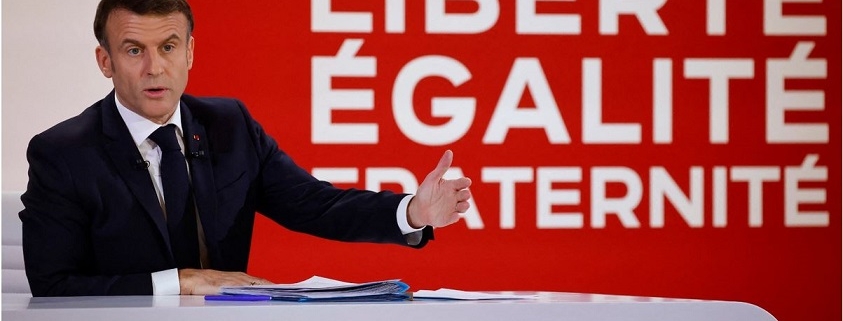
France’s President Emmanuel Macron has discussed a series of ambitious education reforms. These include the introduction of a new curricular reform which will include a greater focus on civics to improve national cohesion, and ensure that students learn “what the Republic means – a history, duties, rights, a language, respect.” Other reforms include strict regulations on screen time in schools, and the implementation of compulsory uniforms. The reforms reflect a broader vision to adapt the educational system to contemporary challenges, and prepare students for a rapidly evolving world. Complete Article HERE.

India’s National Council of Educational Research and Training (NCERT) has announced it will introduce new textbooks which include content on electoral literary, and will update existing textbooks to incorporate this material. The goal is to address voter apathy among young people, and Indians living in urban areas. These measures, which will begin in years 6–12 across all schools, are part of a Memorandum of Understanding signed a few weeks ago between the Election Commission of India and the Education Ministry. The document focuses on training teachers in electoral literary to promote voter awareness among students; creating a “Democracy Room” in secondary schools to display voter education materials; and a mechanism to issue students with voter ID cards when they turn 18. Complete Article HERE

The country’s Ministry of Education this week unveiled new history textbooks with sections about what it calls the “special military operation” in Ukraine, the annexation of Crimea and Western sanctions. Critics say the move is a part of a sustained effort to indoctrinate school children and stifle any independent thinking.
The new textbooks endorse this narrative and include maps that show occupied regions in Ukraine as being part of Russia. Photos of the books published by state media show they call Ukraine an “ultranationalist state” where all dissent is persecuted and “everything Russian is declared hostile.” Elsewhere, the authors tell students that when they look for information about Ukraine on the internet, they should remember that there is a “global industry for the production of staged videos and fake photos and videos.” Complete article HERE

The recent gut-wrenching story of the Jewish student at a Launceston school subjected to antisemitic and Nazi abuse is just the tip of the iceberg. For Jewish students, public schools in Australia are not what you would imagine. Antisemitic bullying is alive and well, and these terrible forces are gaining traction. The frightening reality is that we are getting very close to a point where many young Australians will be hiding their Jewishness for fear of being targeted, singled out and mocked. Schools are supposed to provide an inclusive and nurturing environment in which our young people can learn, free from religious and racial assaults – that is, unless you are Jewish… Complete Article HERE